The Chemistry Water
5 – 27 June
RWS Gallery
3 - 5 Whitcomb Street, London WC2H 7HA
The Royal Watercolour Society is proud to present The Chemistry of Water – an exhibition of new and recent works by artist Modupeola Fadugba.
This special exhibition develops the RWS's expansion of the boundaries of contemporary watercolour practice, and reflects Fadugba's own investment in the materiality of her work. Rather than treating watercolour as a fixed set of materials, the show considers it as a set of behaviours: flow, absorption, resistance, and reflection.
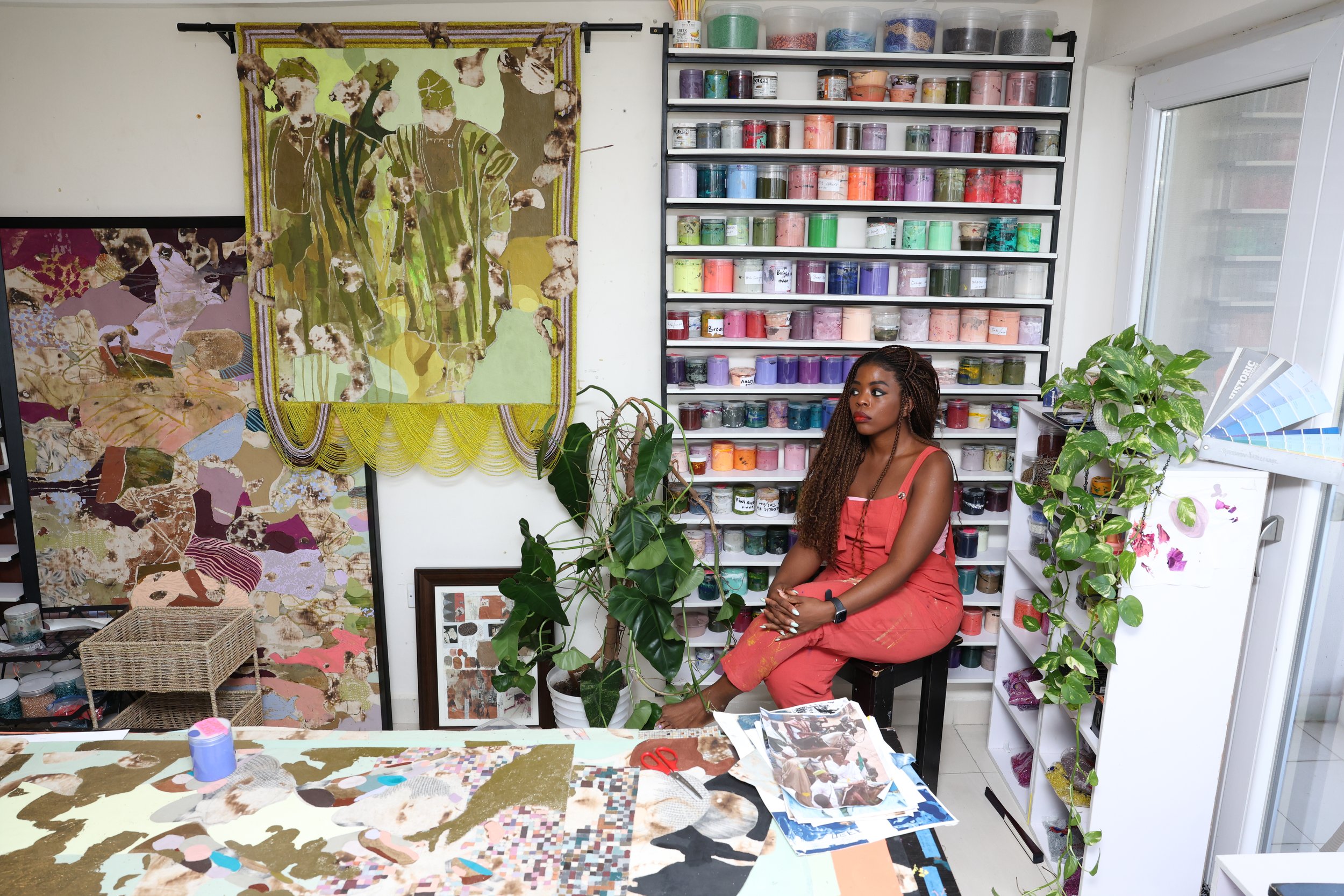
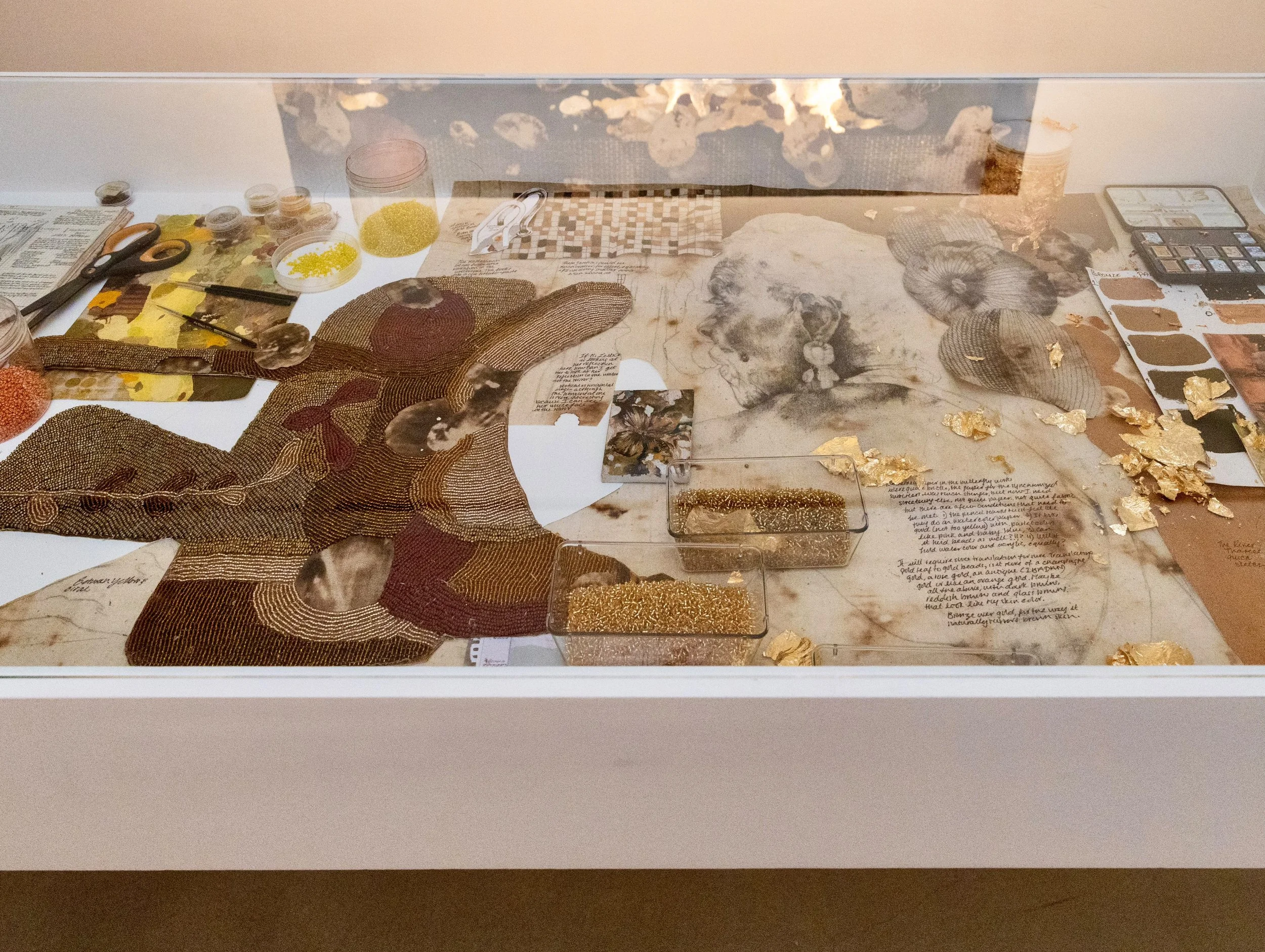
The Chemistry of Water continues Fadugba's wider practice – from Lagos and beyond – where water has been as much a subject as a condition; something that guides both how her figures move and how her materials behave. Acrylics are thinned and layered to act like watercolours, creating transparency and movement. Burnt surfaces alter the way pigment is absorbed. Beads interrupt and redirect its flow. Resist techniques hold space against it.
The exhibition will be accompanied by live programming throughout the duration of the exhibition, layering interdisciplinary voices to activate the works. It also takes place alongside Fadugba’s showcase at the Royal Academy’s Summer Exhibition 2026, running from 16 June - 23 August 2026.
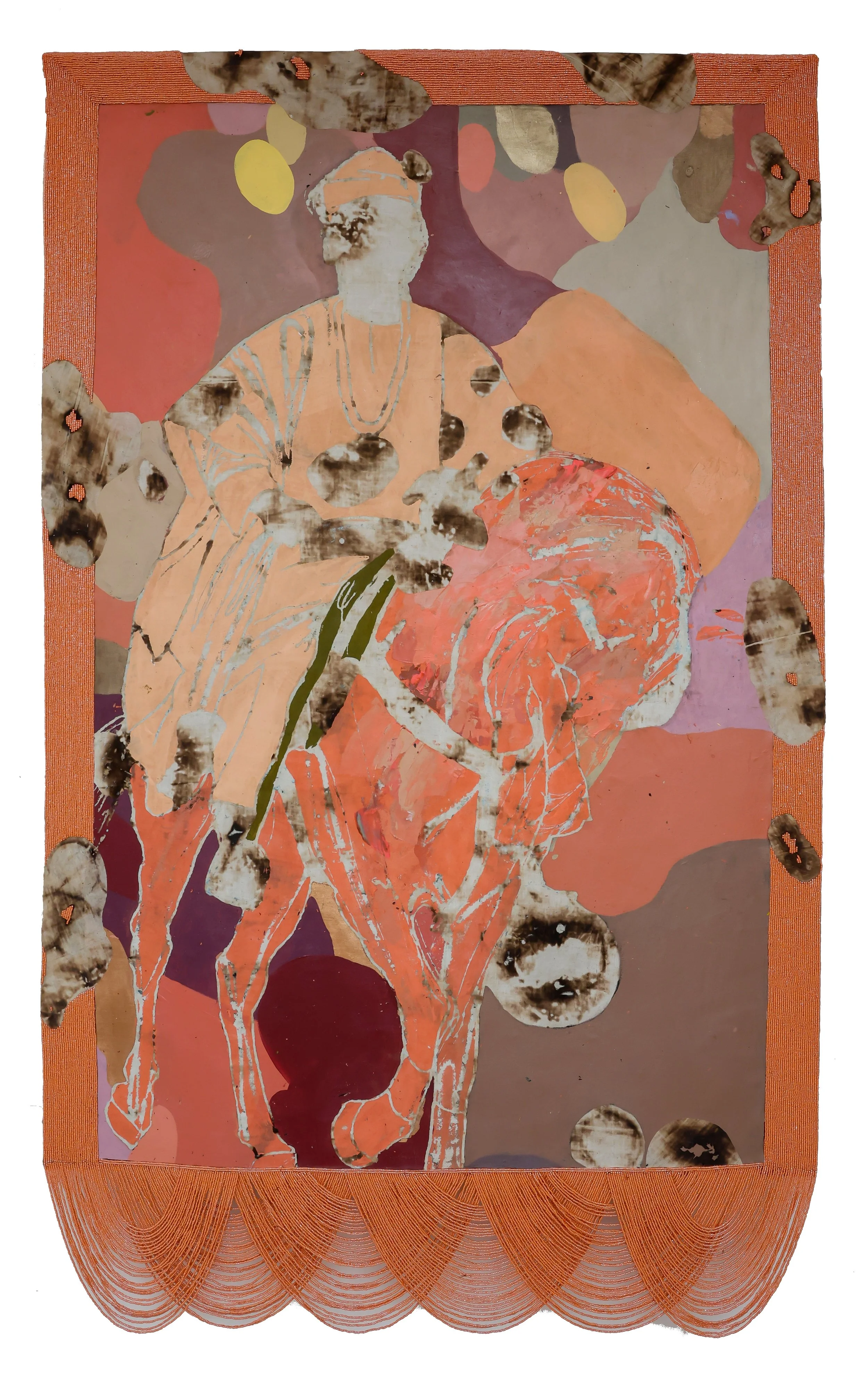
Pink Lone Rider, 2026, Acrylic, graphite, and ink on burned Canvas, 74 x 45 in. | 187.96 x 114.3 cm
Pink Lone Rider by Modupeola Fadugba explores the space between individuality and belonging. Presented in the exhibition The Chemistry of Water, the work reflects on the idea that while communities are formed through connection, every collective begins with an individual. The solitary rider, rendered in vibrant shades of pink, becomes a symbol of selfhood, resilience, and personal journey. Just as a single molecule exists within a larger ecosystem, the lone figure occupies a moment of quiet independence while remaining connected to broader social and cultural networks. Through its bold colour palette and contemplative composition, the work invites viewers to consider the balance between solitude and togetherness, highlighting how personal identity is shaped not only by moments of gathering but also by periods of reflection, movement, and self-discovery.
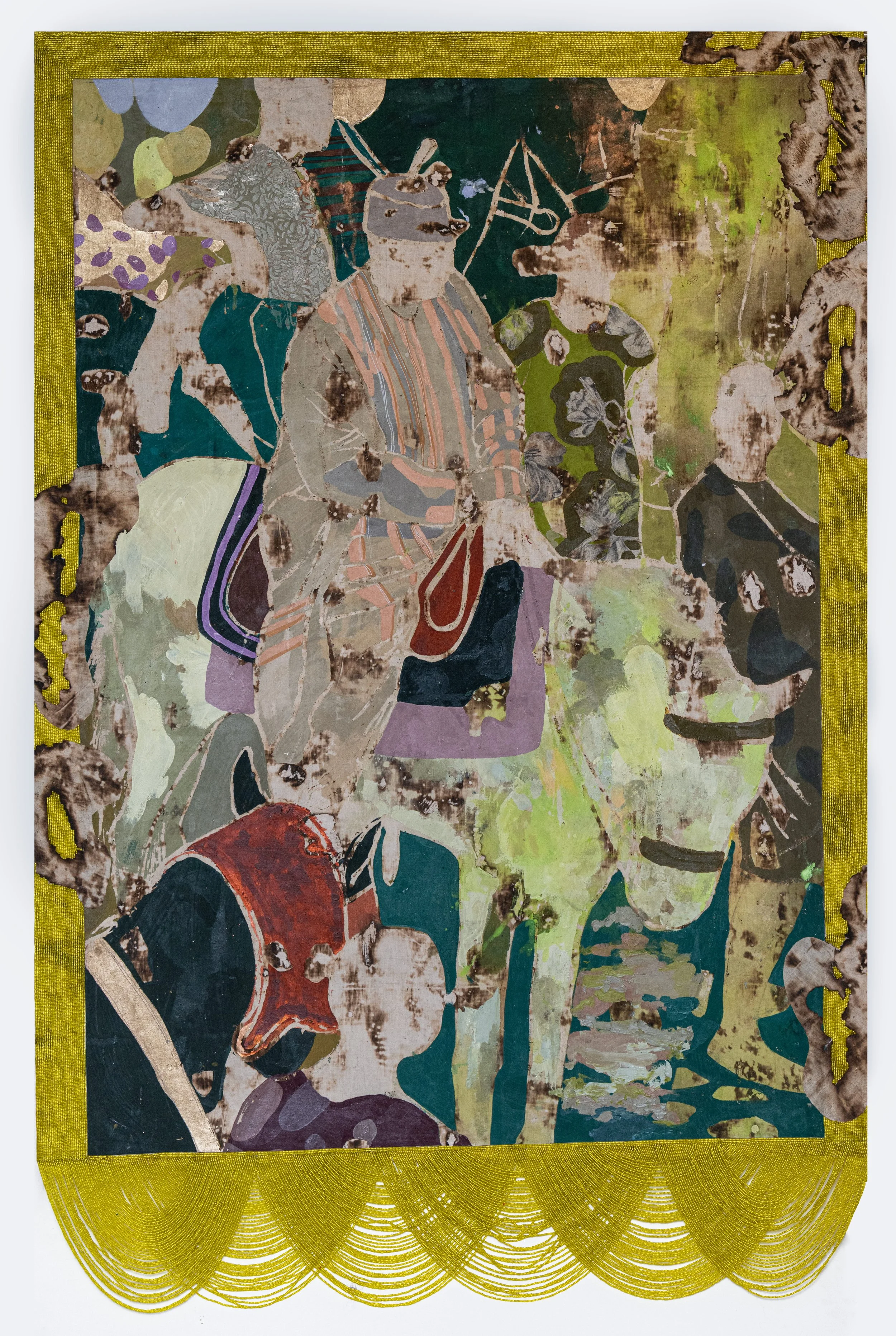
Take a Bow, 2026, Acrylic, ink, graphite, and beads on burned Canvas, 76 x 50 in. | 193.04 x 127cm
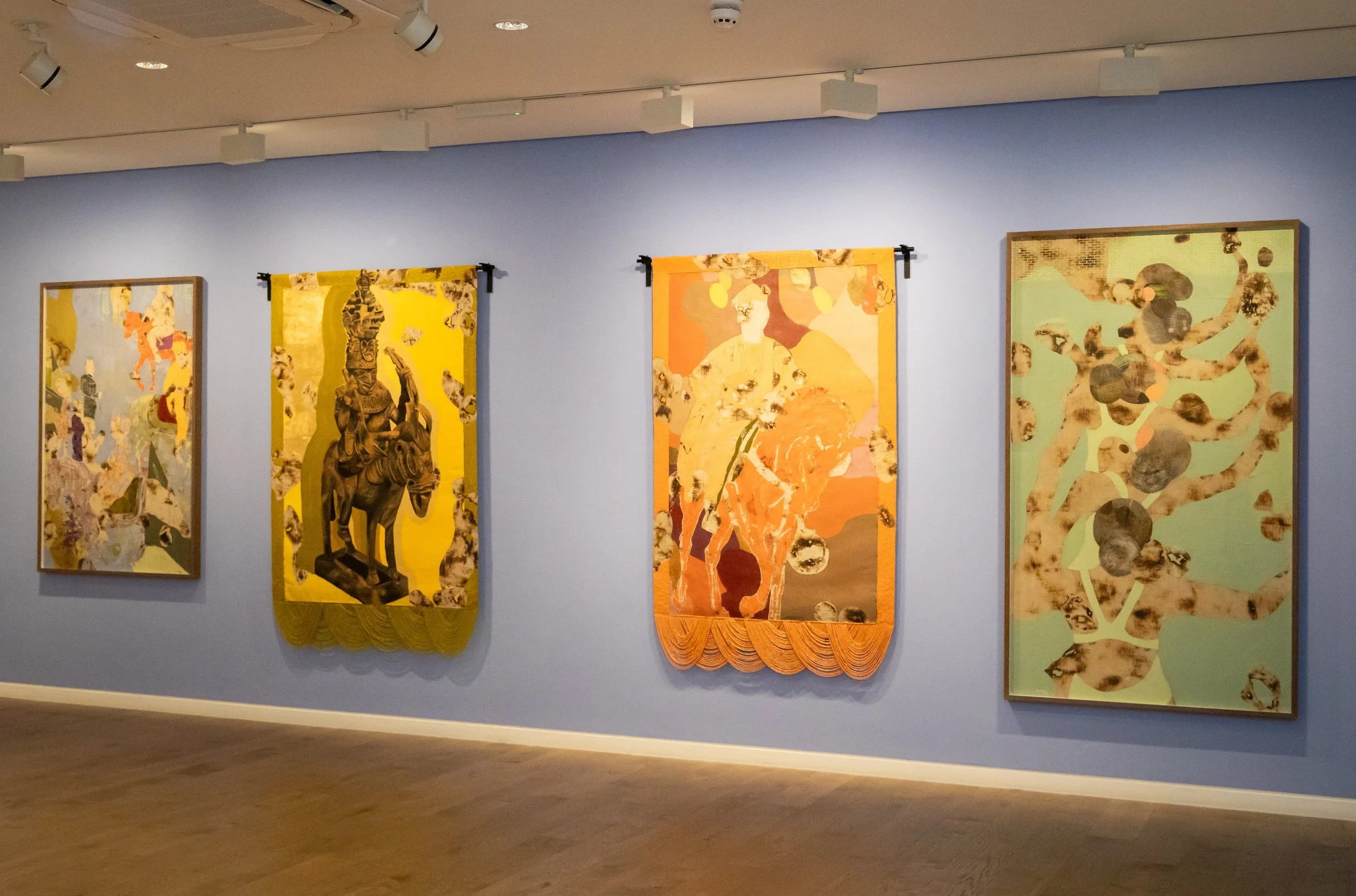
Modupeola draws inspiration from the vibrant spectacle of Nigeria’s Ojude Oba Festival, where elaborately adorned horses and riders take part in processions celebrating heritage, community, and tradition. At the centre of the work is a colourful horse captured in a moment of bowing, a gesture that speaks to the deep culture of honour and respect embedded within the festival. Presented within The Chemistry of Water, the painting reflects on the traditions and values that bind communities together across generations. The horse’s bow is more than a display of training or pageantry; it is an act of homage, expressing reverence for the king, the community, and the cultural legacy the festival represents. Through its vibrant palette and dynamic composition, Taking a Bow celebrates the enduring spirit of respect that is woven into Nigerian cultural life, so deeply that it is reflected not only in people but also in the horses that carry these traditions forward.
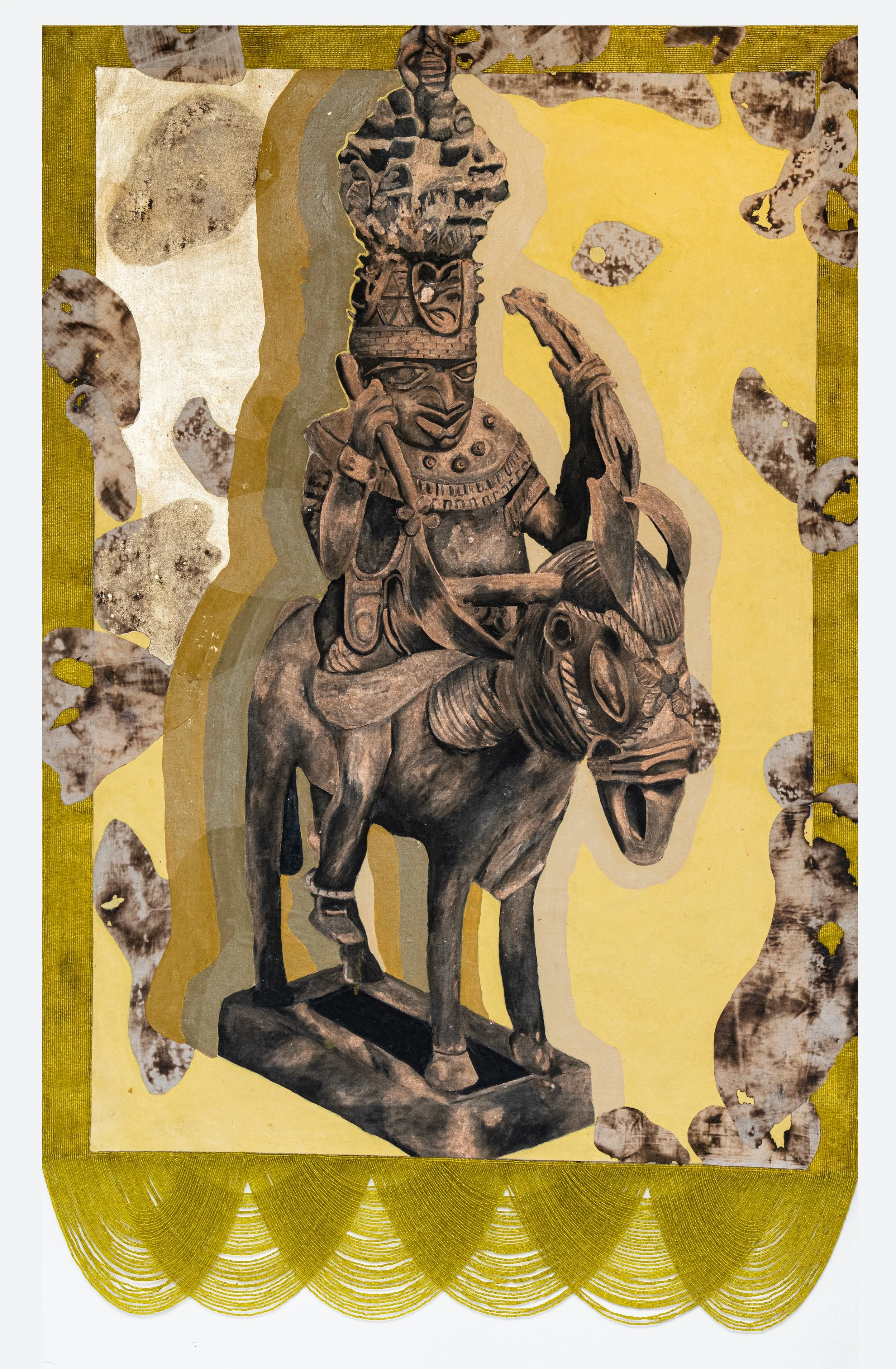
Yellow Benin Rider, 2026 Acrylic, metal leaf, and beads on burned canvas, 74 x 45 in. | 187.96 x 114.3 cm
Modupeola Fadugba draws inspiration from the rich artistic heritage of the Benin Kingdom, reimagining the mounted figure as a symbol of cultural memory, resilience, and continuity. Presented within The Chemistry of Water, the work reflects on how history and tradition flow across generations, remaining connected to their origins while taking on new forms. Fadugba’s use of bronze tones references the historic Benin bronzes, creating a visual link to the kingdom’s renowned sculptural tradition while translating its legacy into a contemporary painted expression. Through this dialogue between past and present, Benin Rider celebrates the enduring influence of cultural heritage.
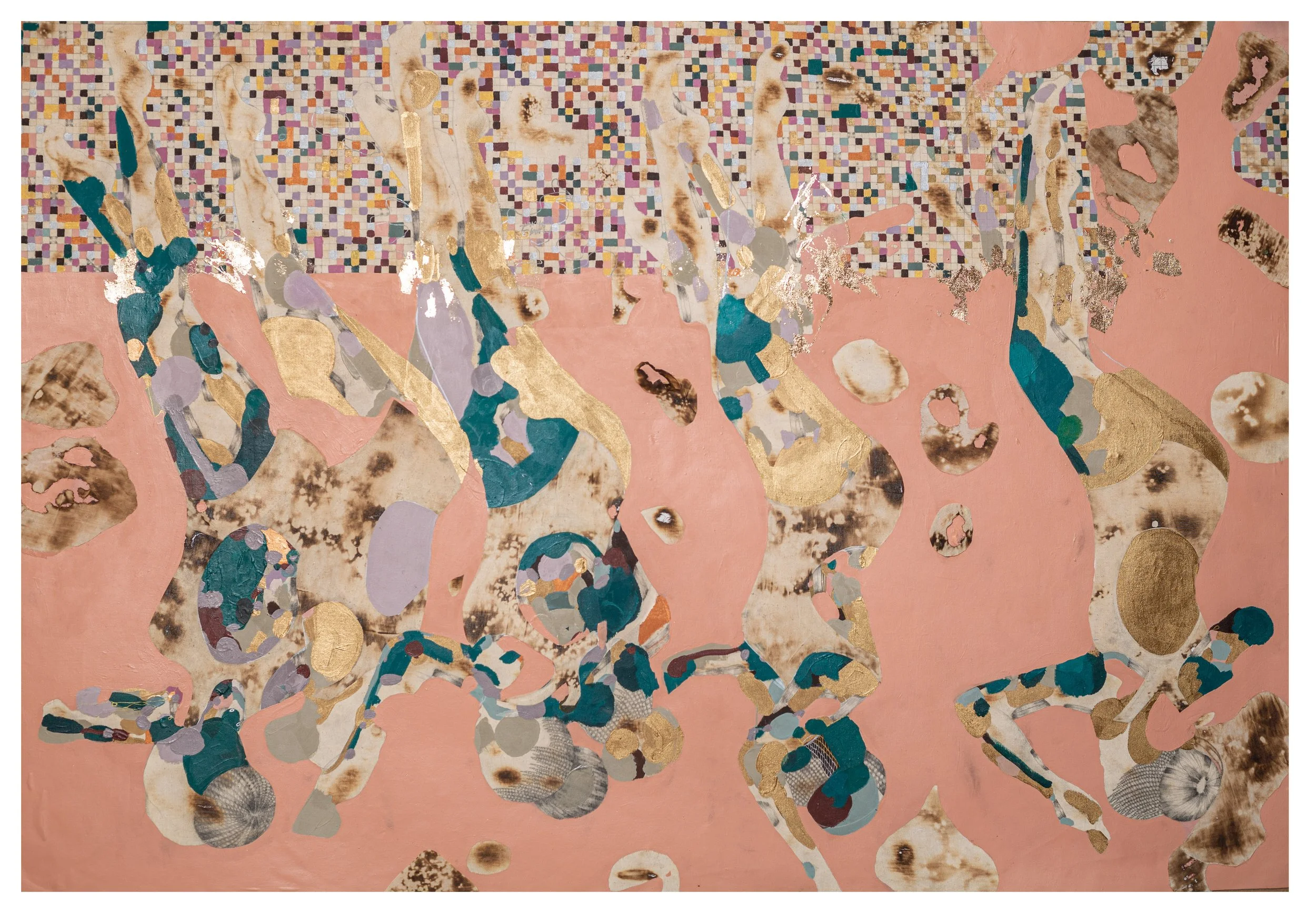
Pink Confetti, 2025, Acrylic, graphite, ink, and metal leaf on burned Canvas, 71×46 in. | 180.34×116.84 cm
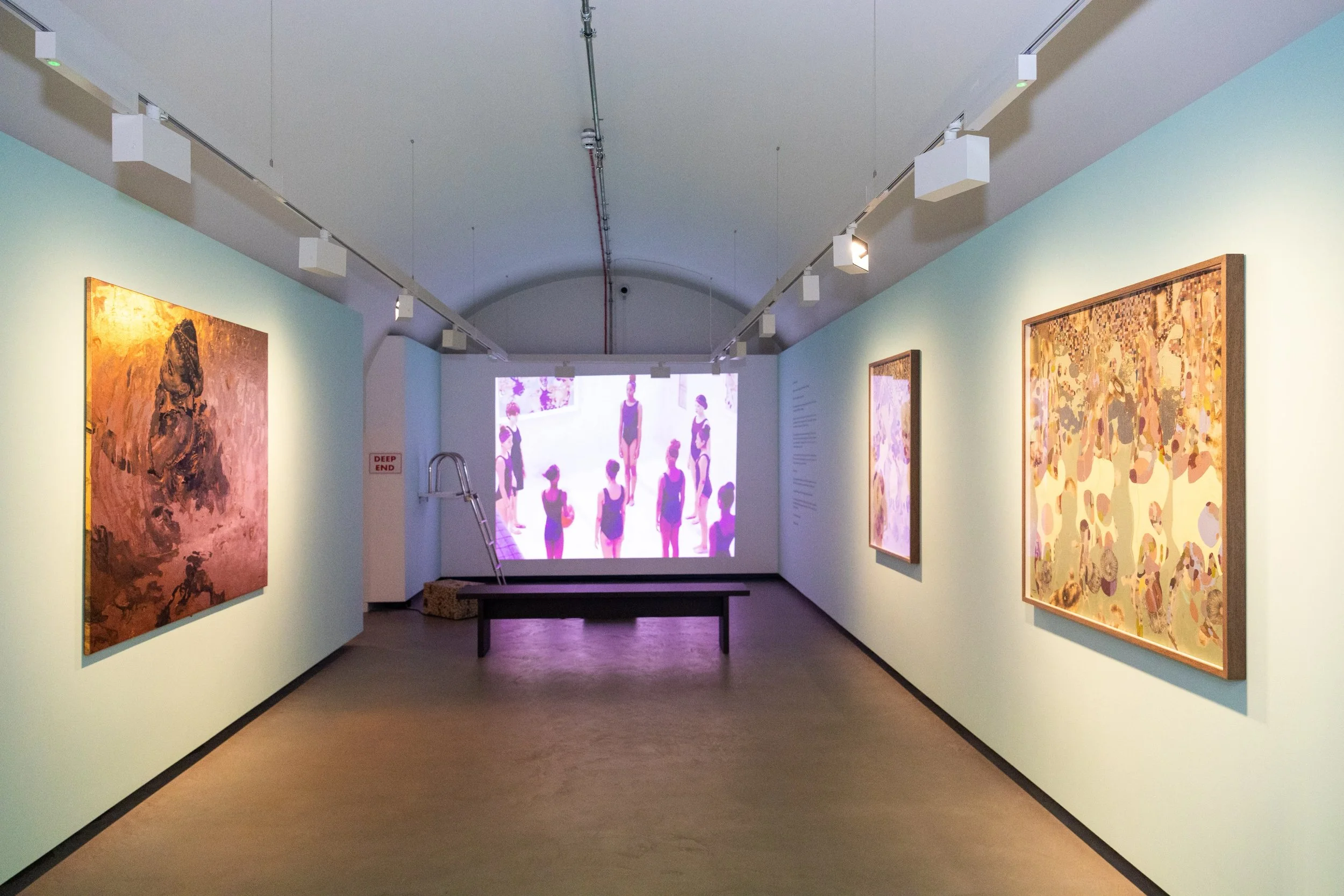
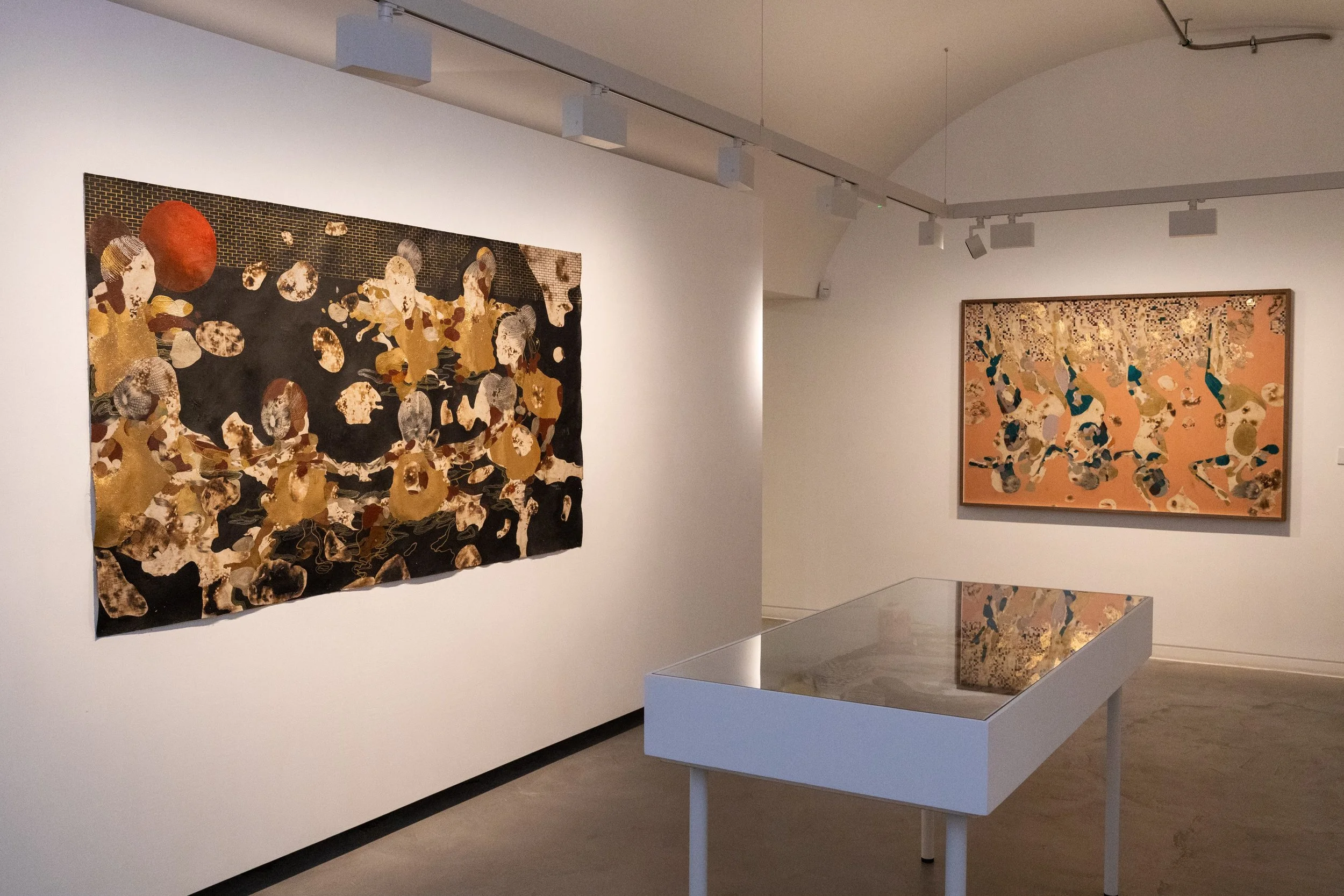
Pink Confetti expands the checkerboard horizon of Mint Side Up II in scale and colour. Overlapping swimmers in teal, lavender, gold, and burgundy fill the canvas, while metal leaf and burn marks animate the surface. A multicoloured checkerboard band crowns the composition, suggesting a pixelated image dissolving into colour — the series's themes of collective presence resolved in their most festive register.
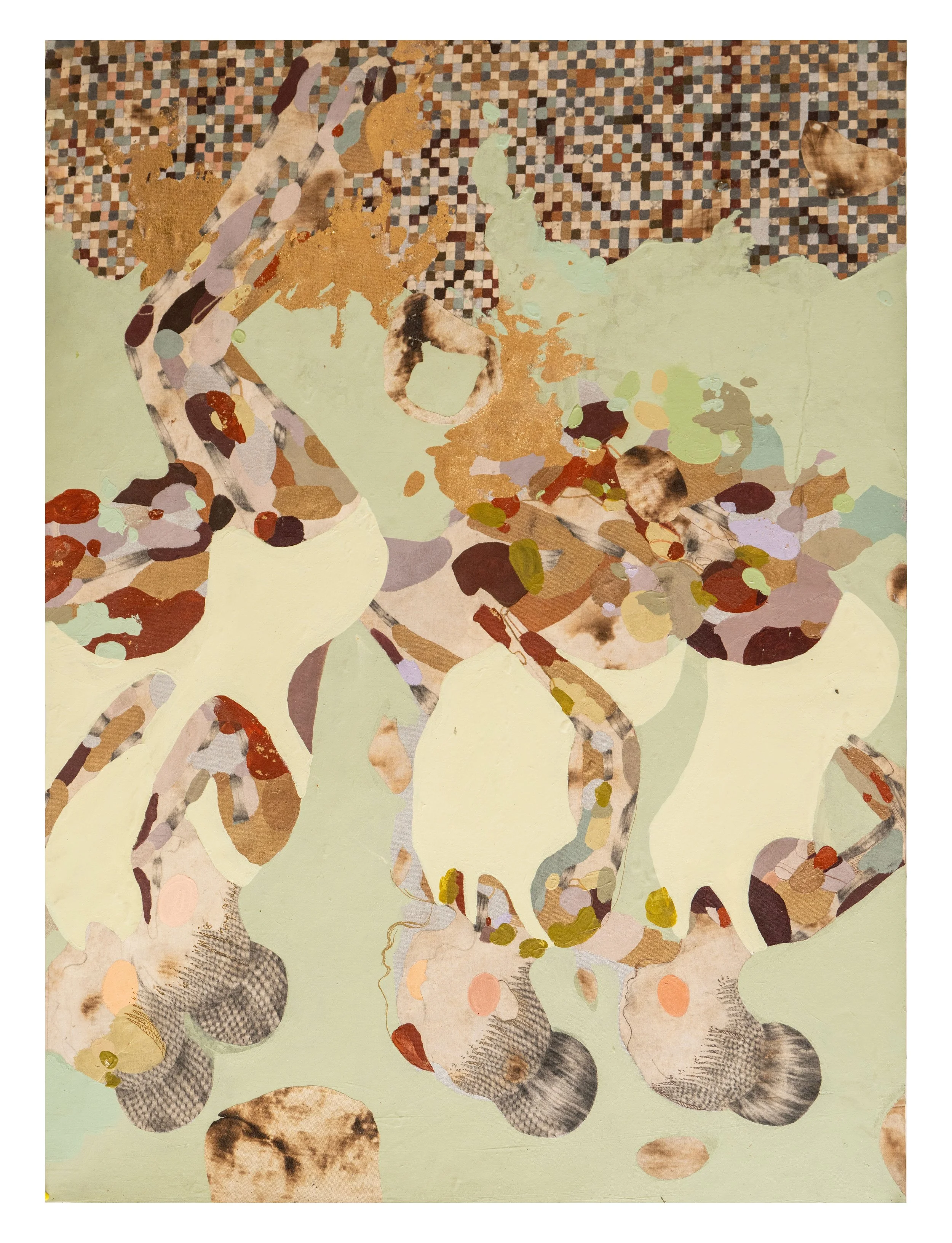
Mint Side Up II, 2025, Acrylic, graphite, ink and metal leaf on burned Canvas, 47 x 34.5 in | 119.38 x 87.63 cm
In Mint Side Up II, Modupeola Fadugba captures a familiar swimmer’s instinct, the playful moment of turning upside down beneath the water. She transforms this fleeting action into a composed visual memory, where swimmers lift their legs, flicking and splashing through mint tones and gold leaf. Scattered confetti-like tiles add a dreamlike brightness, almost childlike in their joy and chaos.
The work also reflects what the artist has learned over years of practice: that discipline and play are not opposites, and that mastery comes from embracing experimentation, risk, and freedom within structure.
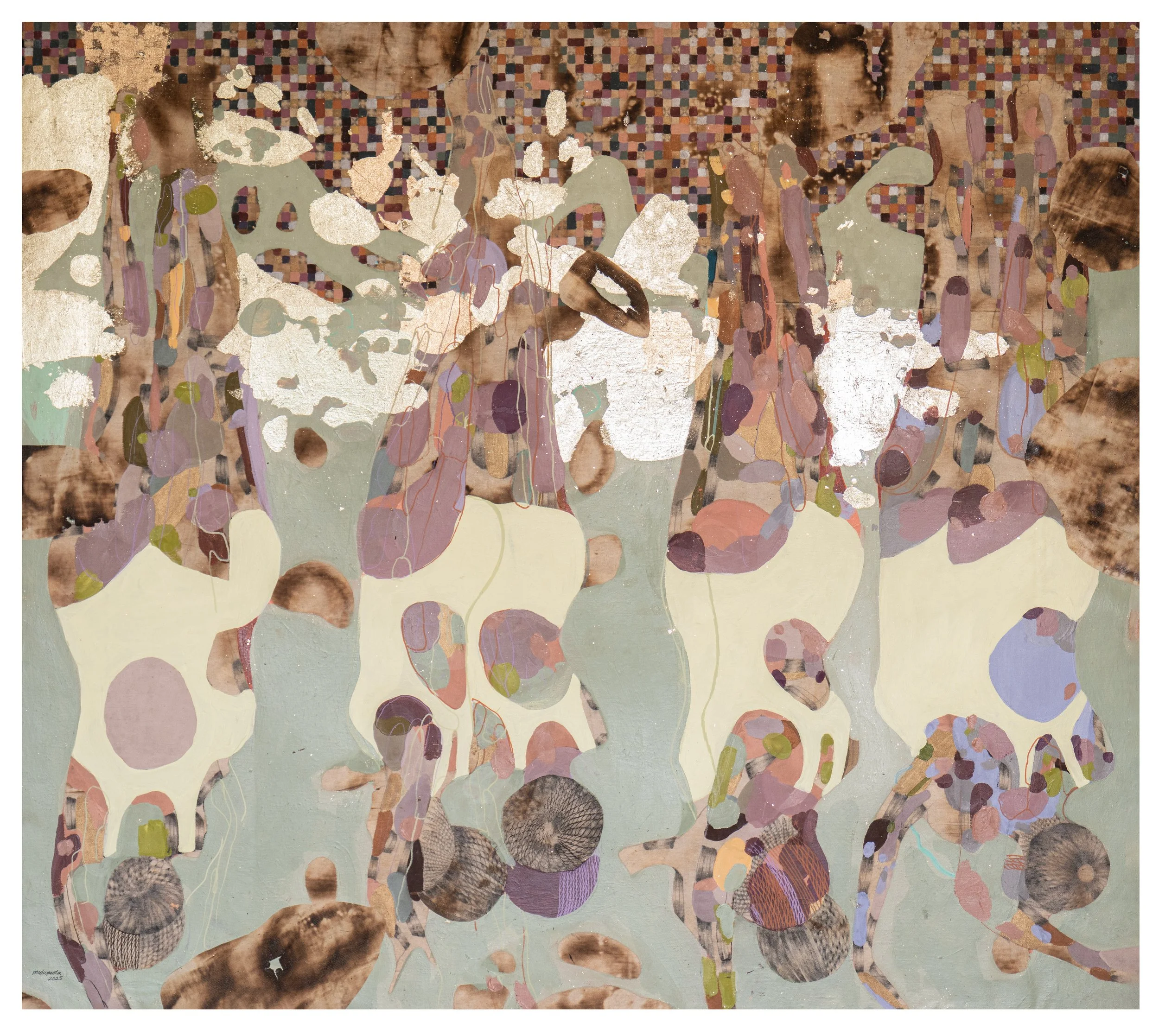
Squad Side Up, 2025, Acrylic, graphite, ink, and metal leaf on burned Canvas, 51.2 x 44.5 in | 130.048 x 113.03 cm
Squad Side Up transforms a swimmer's playful instinct, turning upside down beneath the water, into a meditation on perception and freedom. Figures move through a vibrant blue field of confetti-like forms, their inversion challenging conventional ways of seeing and reflecting the artist's belief that discovery lives in the interplay between discipline and play.
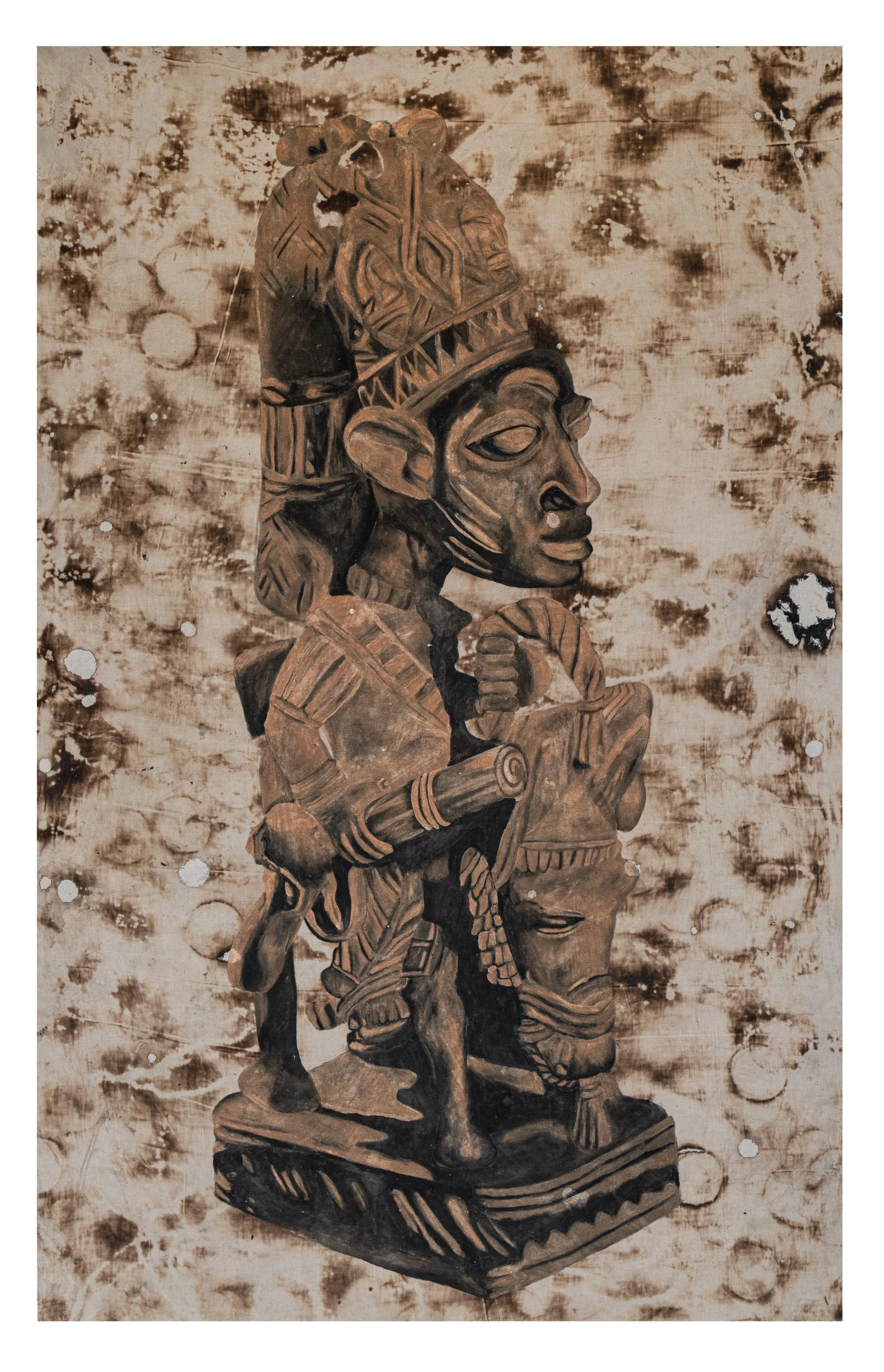
The Yoruba Rider, 2026 Acrylic on burned canvas, 62 x 42 in |157.48 x 106.68cm
The Yoruba Rider by Modupeola pays homage to the enduring legacy of master sculptor Lamidi Fakeye, one of the most celebrated figures in modern Yoruba art. Drawing inspiration from Fakeye’s iconic equestrian sculptures, the painting reinterprets the rider as a symbol of cultural continuity, memory, and identity. Presented within the exhibition The Chemistry of Water, the work reflects on how traditions, stories, and artistic influences flow across generations, much like water carrying traces of its source while adapting to new environments. By translating a sculptural form into paint, Fadugba creates a dialogue between past and present, honouring Fakeye’s contribution to Yoruba visual culture while bringing a legacy often encountered in museums and institutional collections into a more immediate and accessible space. In doing so, the work invites viewers to engage with a rich cultural heritage that continues to shape contemporary artistic expression.
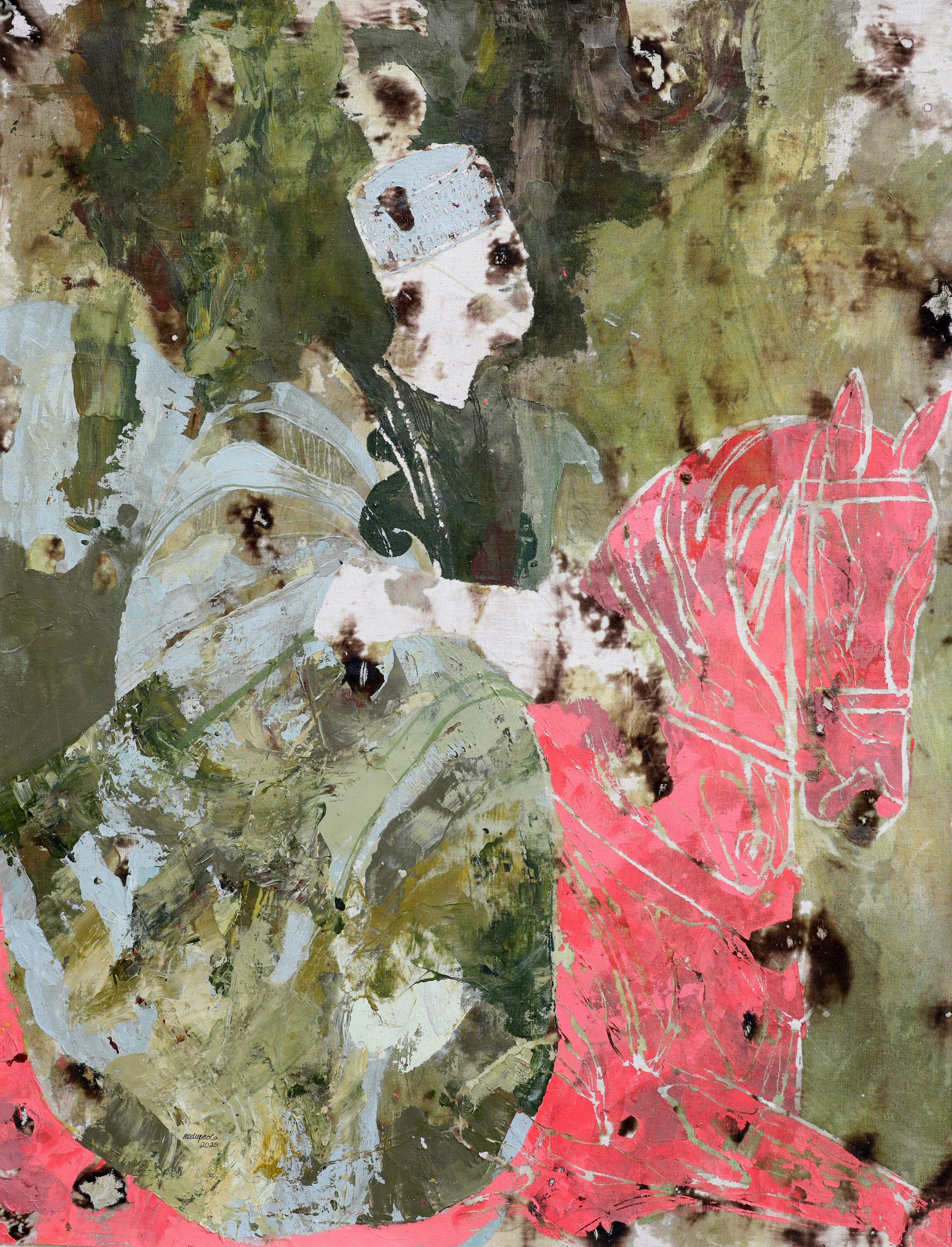
Coral Crossing, 2025, Acrylic on burned Canvas, 44 x 34.5 in. | 111.76 x 87.63 cm
Presented within The Chemistry of Water, Coral Crossing depicts an African male rider mounted on a horse in coral, bringing together terrestrial and marine worlds in a symbolic journey of movement, resilience, and connection. The coral horse, built over centuries by countless living organisms, embodies collective memory, adaptation, and survival, transforming the rider’s passage into one guided by the accumulated knowledge and endurance of generations. As the figure traverses an undefined landscape, the work reflects on water as a medium through which histories, people, and ideas travel, evoking movement across continents, cultures, and states of being. Through this striking union of rider and coral steed, Fadugba highlights the fragile yet enduring structures that sustain human journeys and connect us across time and place.
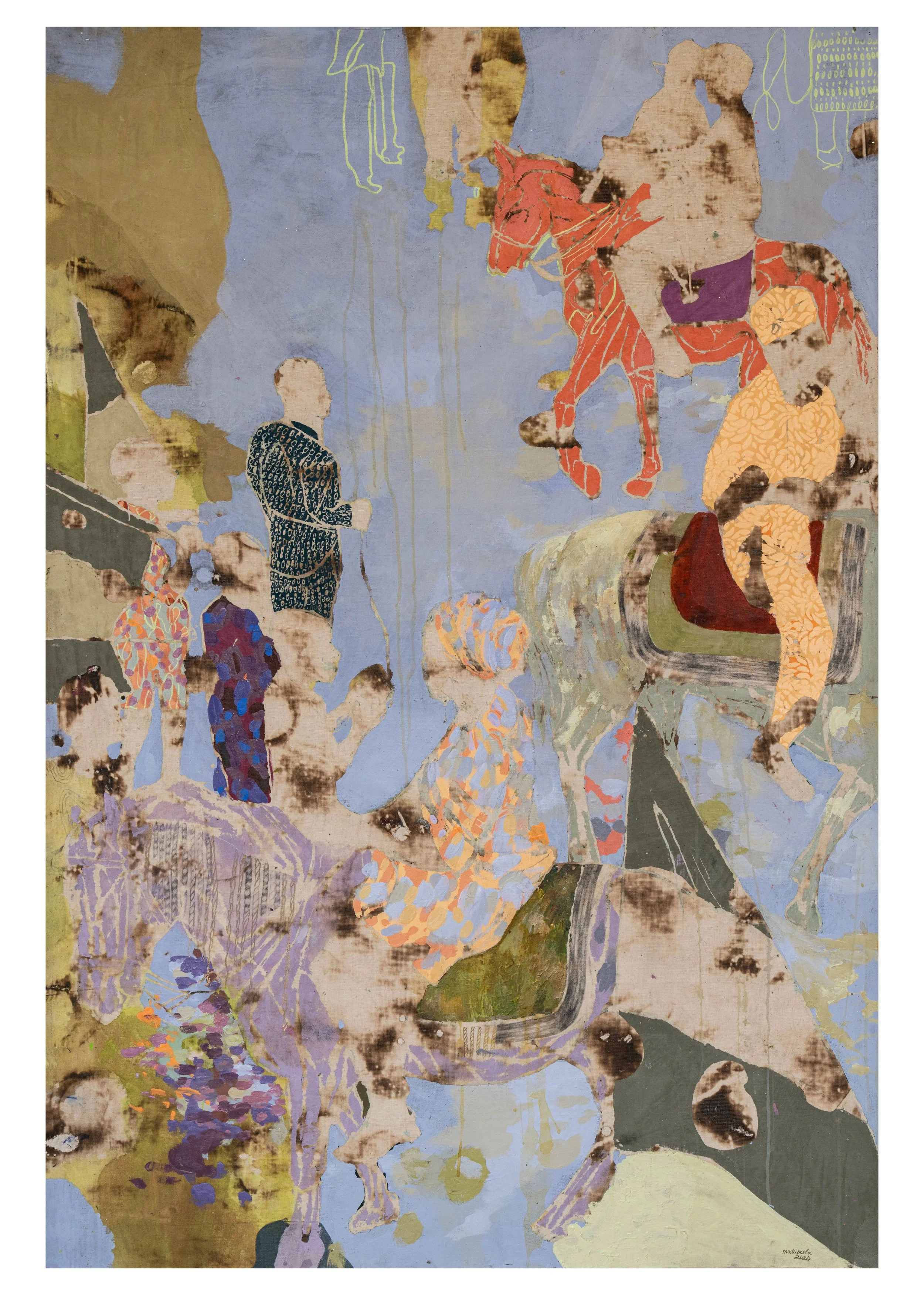
Periwinkle Patriot, 2026, Acrylic, graphite, and ink on burned Canvas, 65.7 x 44 in. | 165.1 x 111.76 cm
Periwinkle Patriot draws inspiration from Nigeria's Ojude Oba Festival, reflecting on the invisible forces that unite people across generations. Through the image of the horse, a central symbol of prestige and celebration in the festival, Fadugba explores how recurring gatherings strengthen the social bonds that sustain communities over time. As water forms through the coming together of separate elements, so too is human connection built through shared tradition and collective ritual.
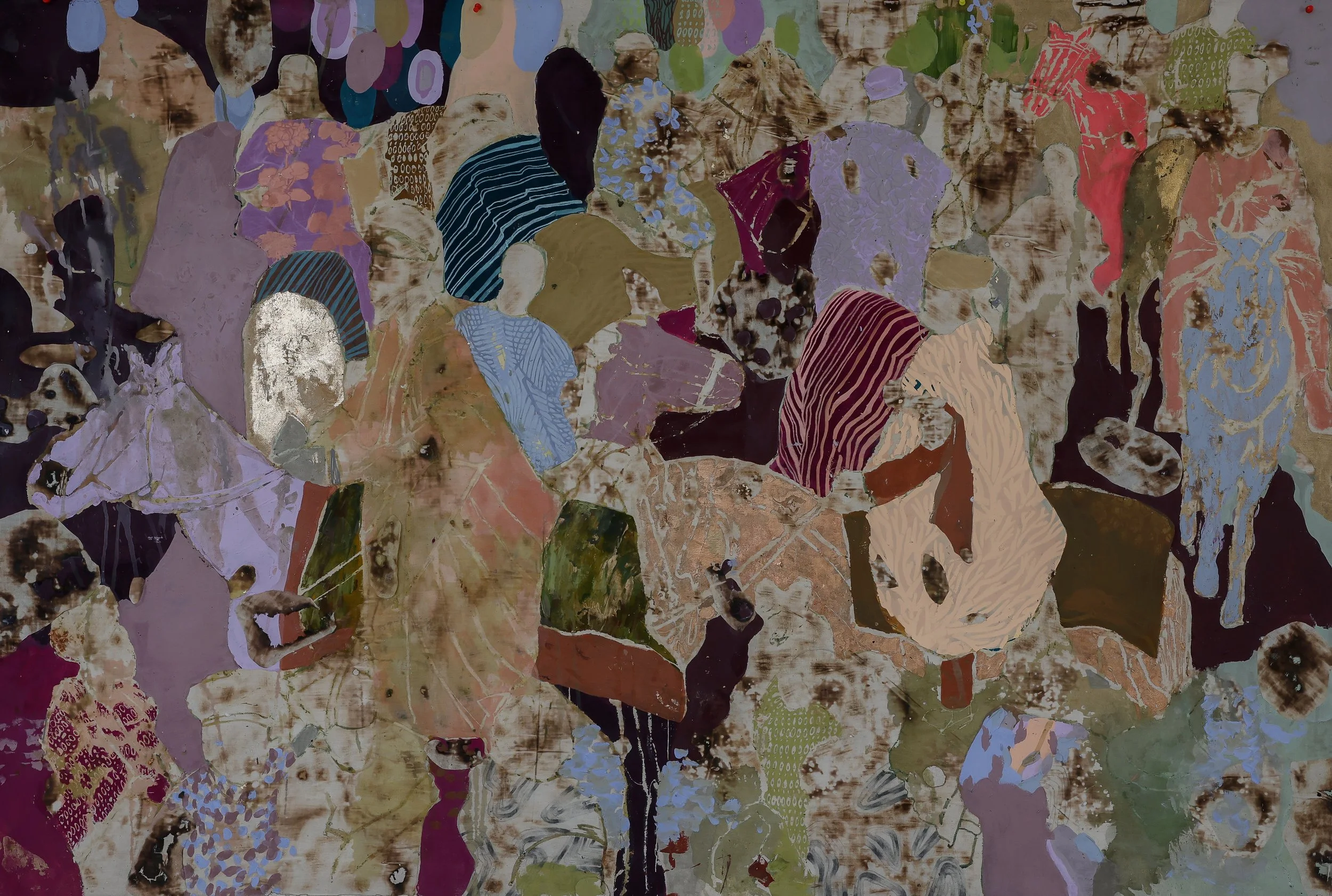
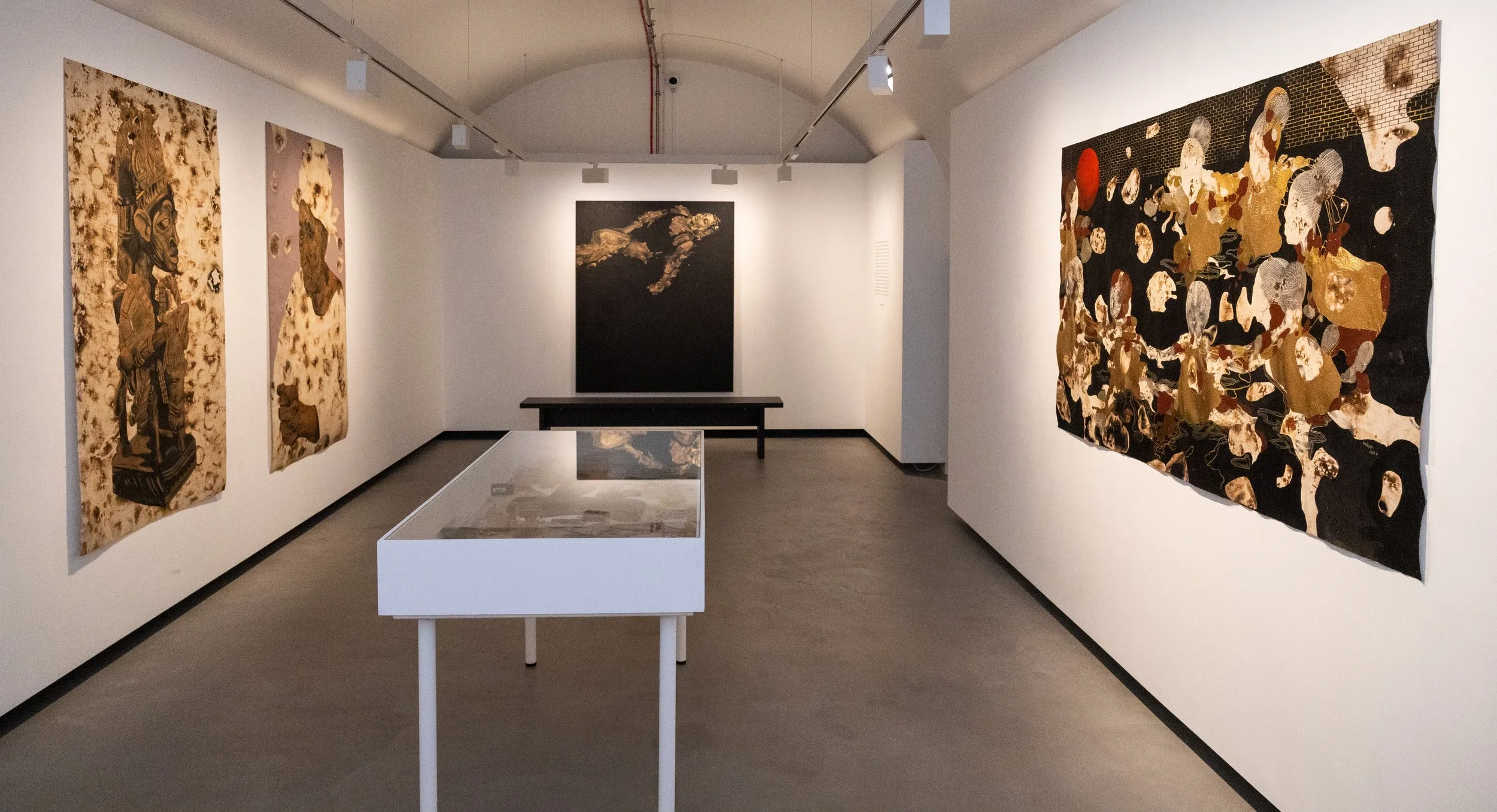
The Gathering, 2025, Acrylic, graphite, ink, and metal leaf on burned Canvas, 46 × 71 in.| 116.84 x 180.34 cm
The Gathering by Modupeola Fadugba draws inspiration from Nigeria’s celebrated Ojude Oba Festival, where families, communities, and generations come together in a vibrant expression of culture and belonging. Presented within The Chemistry of Water, the work reflects on the forces that unite people, much like atoms bonding to form something greater than themselves. Through the image of the horse, a central symbol of the festival, Fadugba celebrates gathering as an act of connection, renewal, and collective identity, highlighting the enduring bonds that sustain communities across generations.
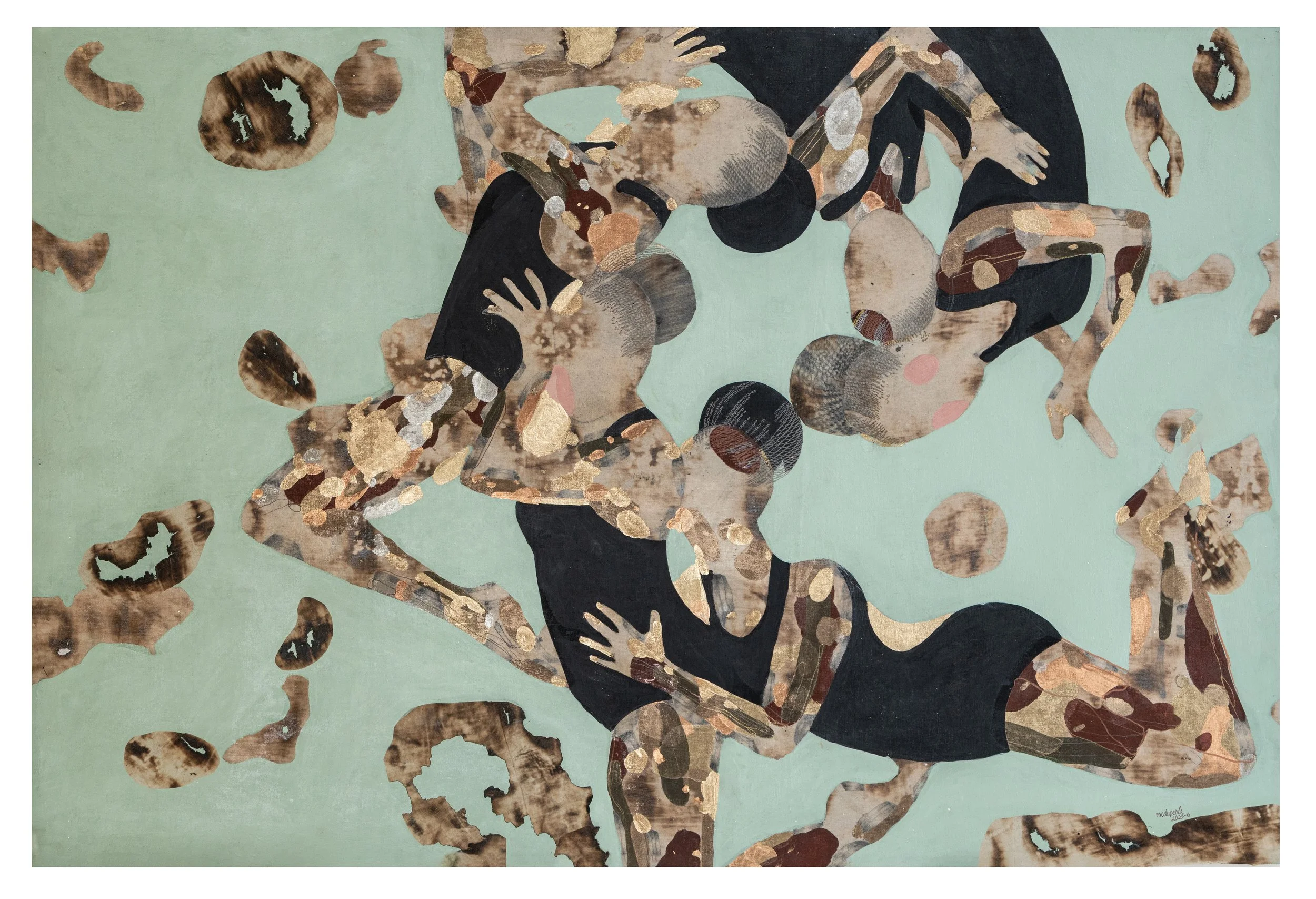
Mint Train, 2026, Acrylic, graphite, and ink on burned Canvas, 44 × 65 in. | 111.76 x 165.1cm
Mint Train captures a quiet moment of movement and shared journey. Rendered in cool mint tones and black suits, the mint hue marks the artist's personal transition from monochromatic palettes to a more expressive use of colour. Like Fadugba's Pink Train, this dynamic composition remains a symbol of collective experience, embodying growth, experimentation, and creative evolution.
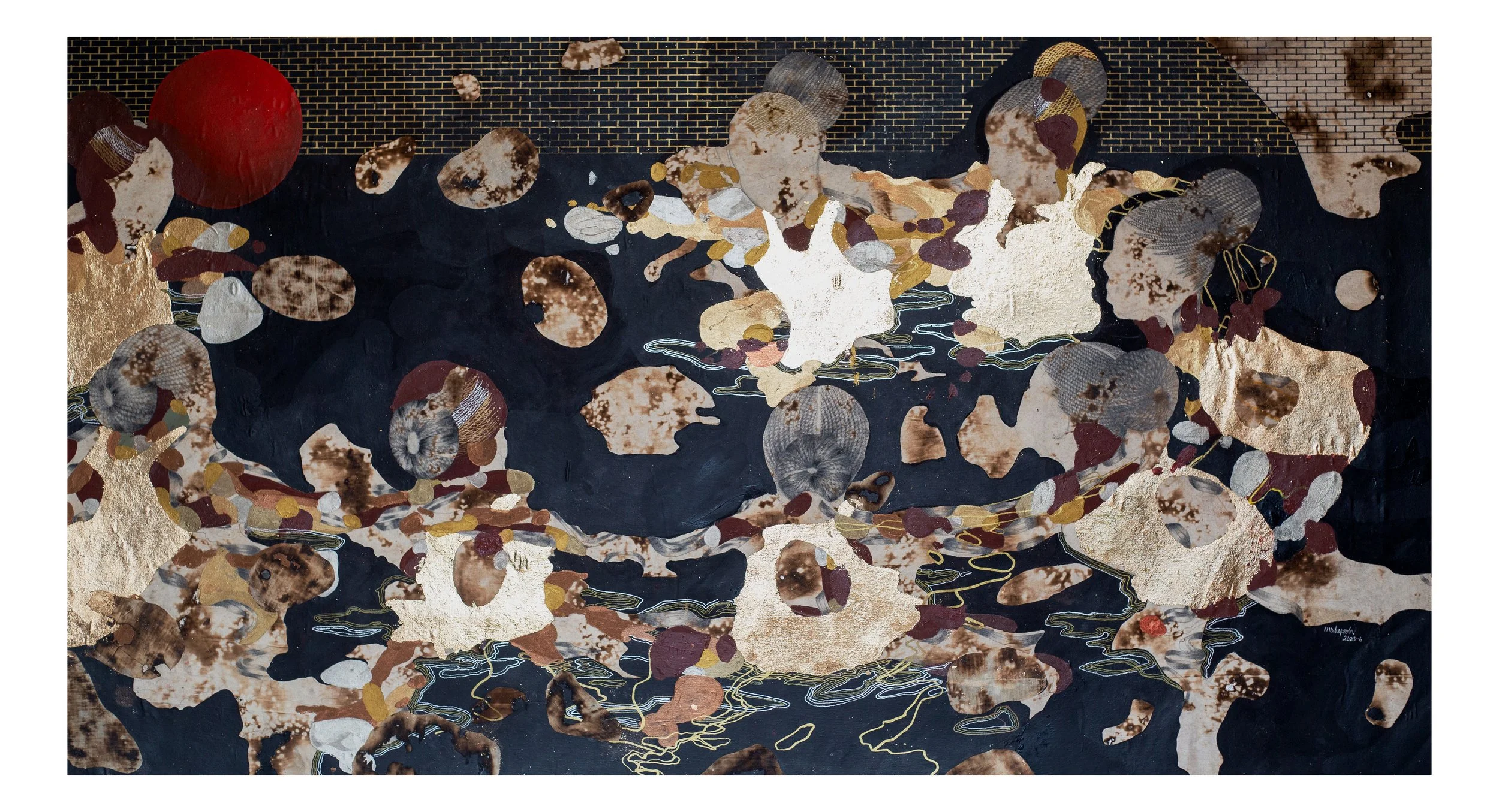
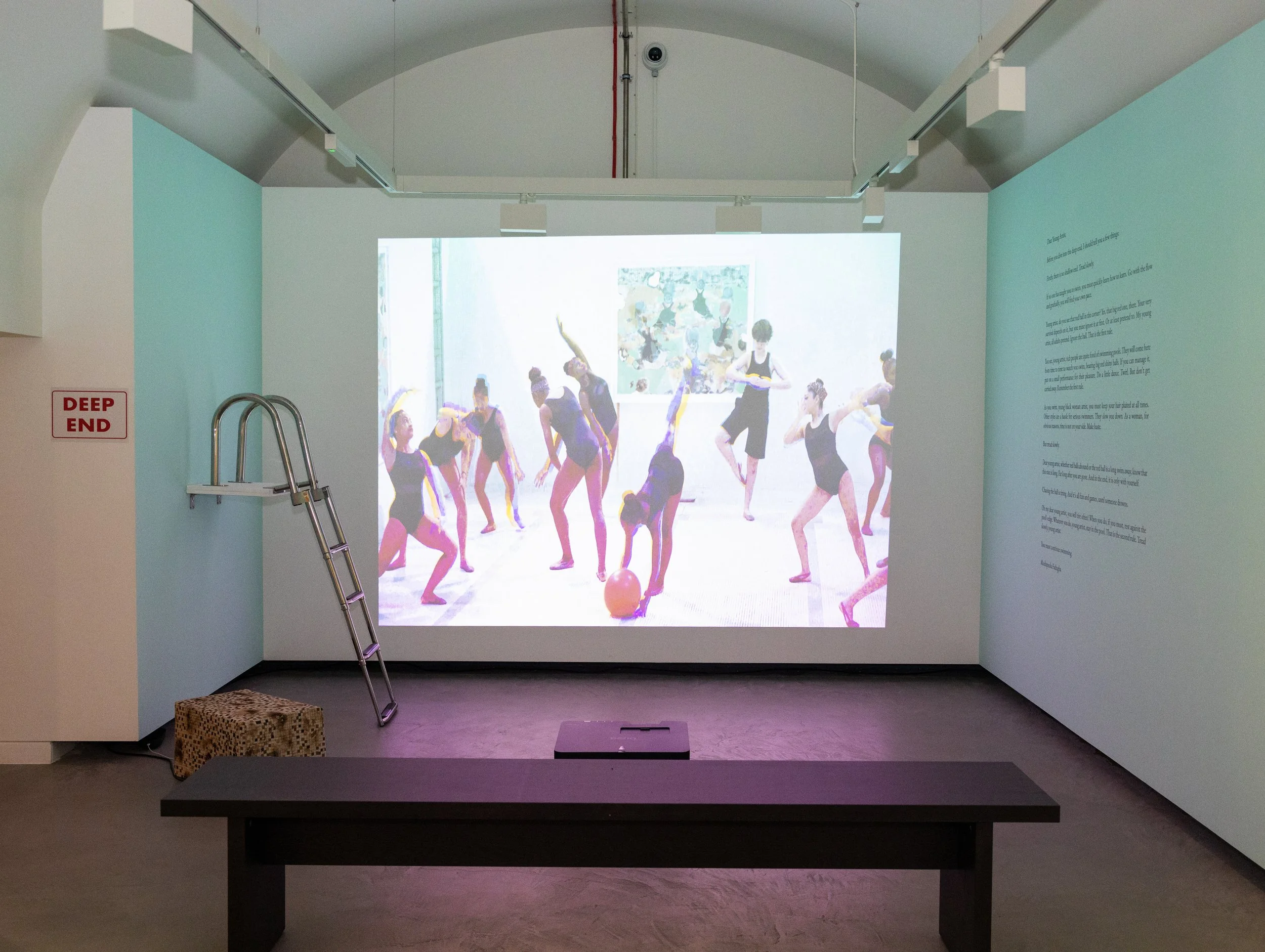
Put on a Show, A Dance, A Twirl, 2025, Acrylic, graphite, ink, and metal leaf on burned Canvas, 46 ×71in.|116.84 x 180.34cm
Put on a Show, A Dance, A Twirl unites the synchronised swimmer, as a figure of collective empowerment, with the art world, a body of water to be navigated with care. Anonymous figures circle a gold field of metal leaf on burned canvas, individual identity dissolved into shared motion. At the centre, a red circle holds the work's core tension, part commercial red dot, part inner compass, a caution against mistaking recognition for destination.
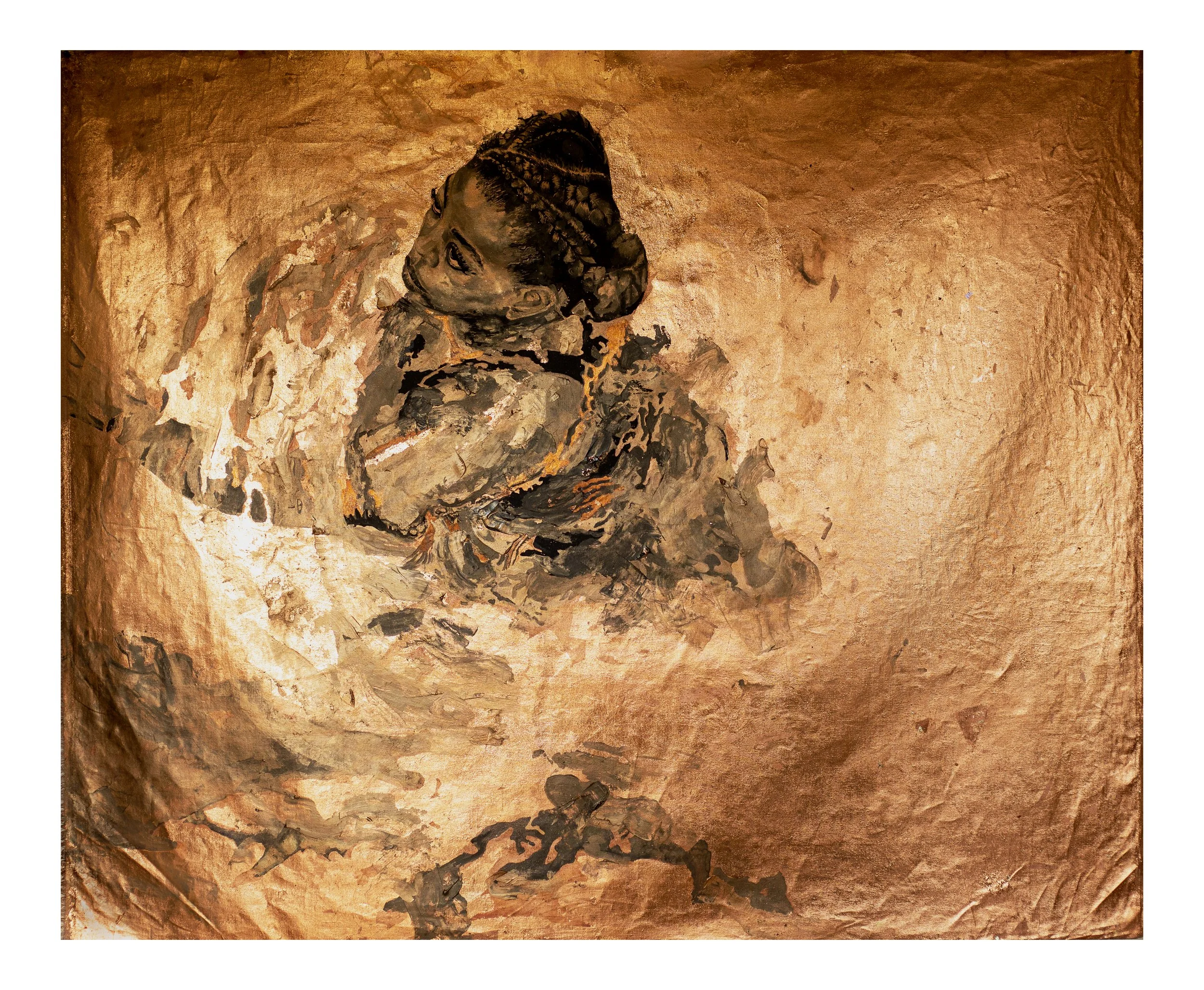
In Liquid Bronze II, 2026, Acrylic and metal leaf on Canvas, 60 x 72 in| 152.4 x 182.88 cm
In Liquid Bronze II, Modupeola Fadugba presents a solitary figure of Modupeola swimming through bronze-toned water, immersed in shimmering bronze leaf. The surface glows with warmth and depth, turning movement into a meditative passage between stillness and flow. Rooted in the artist’s ongoing practice of self-assessment and reflection, the work invites the viewer to challenge the ordinary and turn inward. It becomes a space where resilience, identity, and transformation quietly unfold.
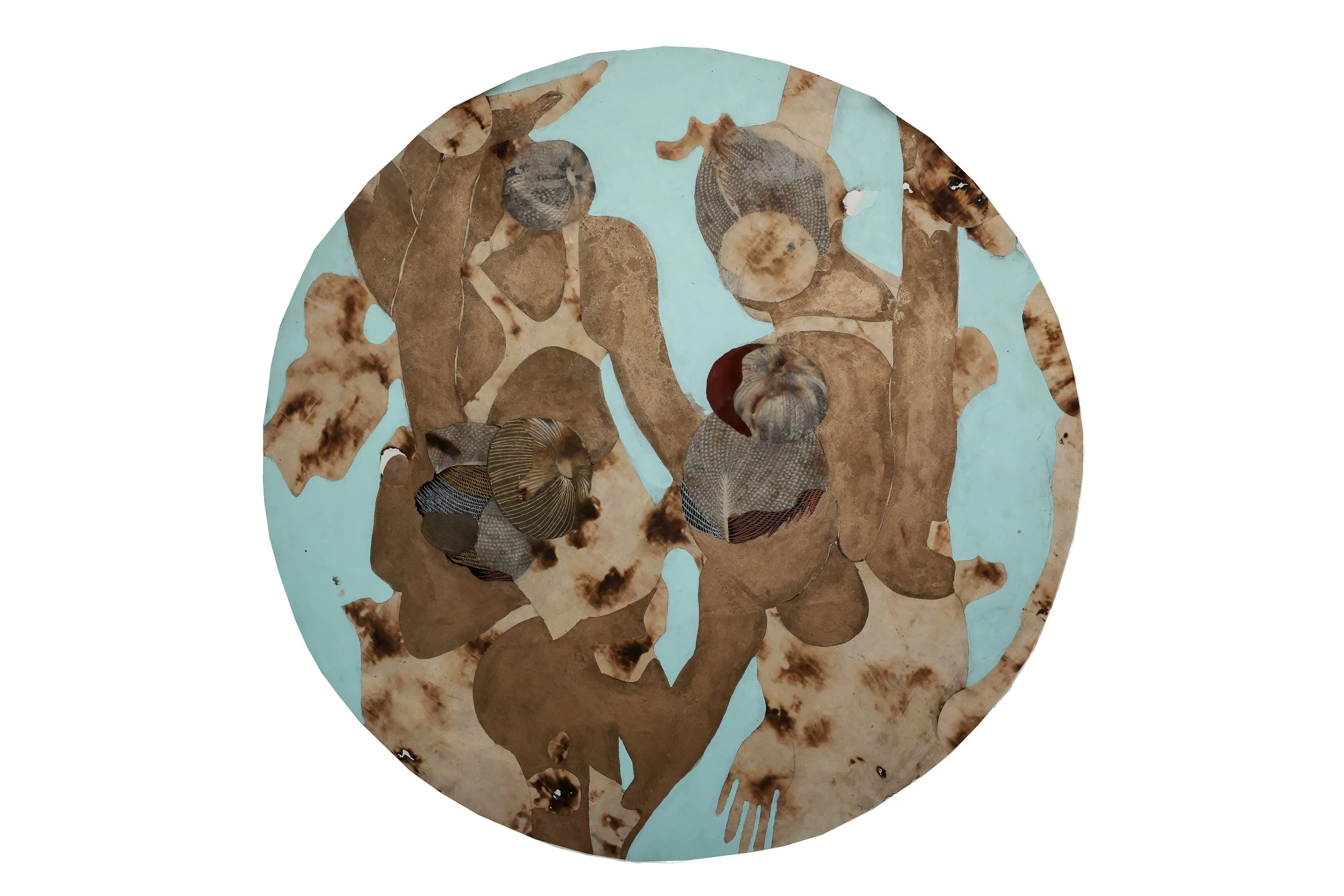
Show Off Girls, 2026, Acrylic, graphite, and ink on burned Canvas, 45 in.|114 cm
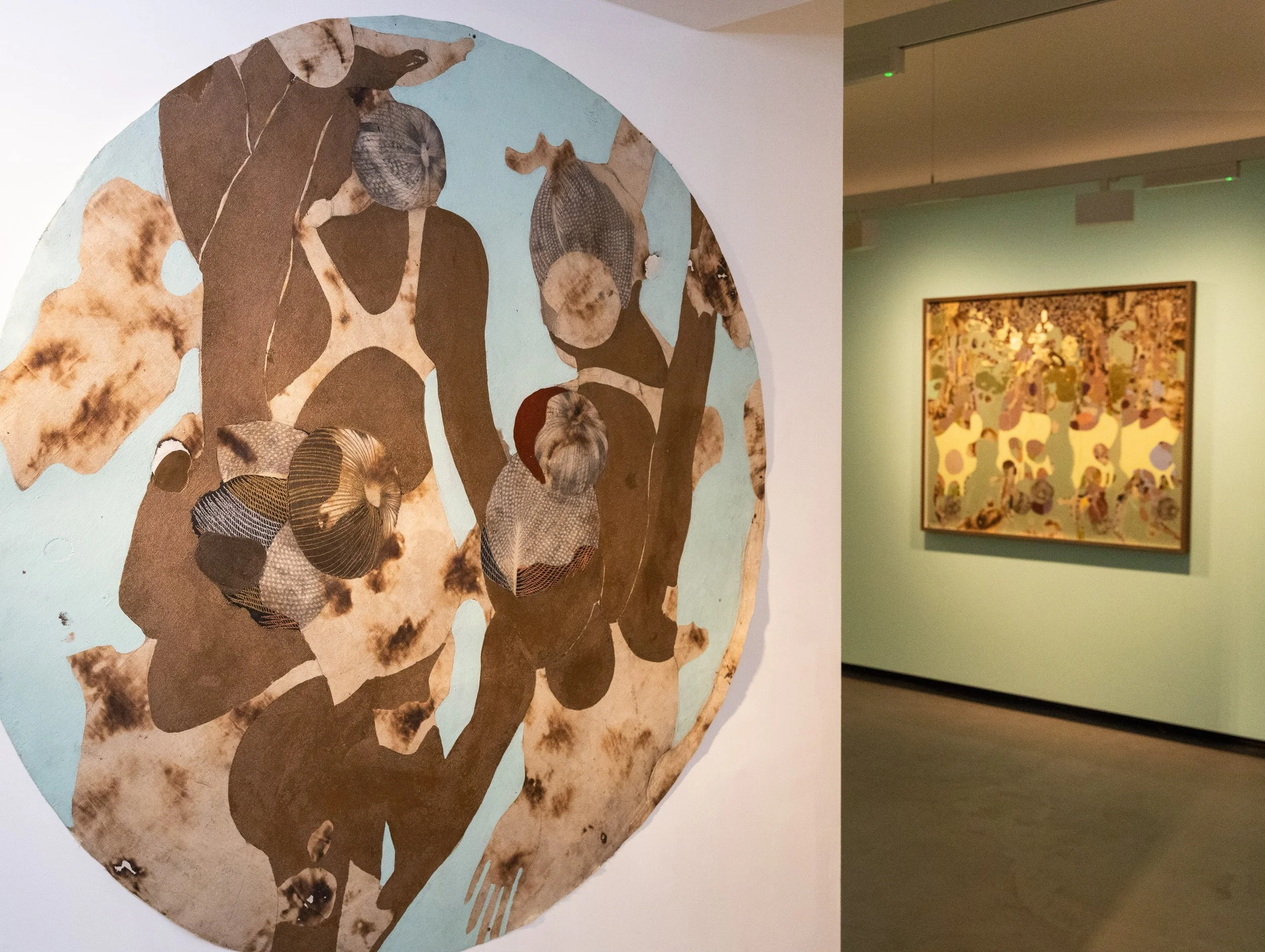
Show-Off Girls celebrates the confidence, precision, and joy of synchronized swimming. Set against a blue ground that evokes the depth and fluidity of water, we see four compositions that draw viewers into a dynamic performance of collective expression, with clear, braided hair in pencil and ink. The work reflects on water as both a stage and a catalyst, an element that enables visibility, connection, and the formation of community through shared movement, like Chemistry.
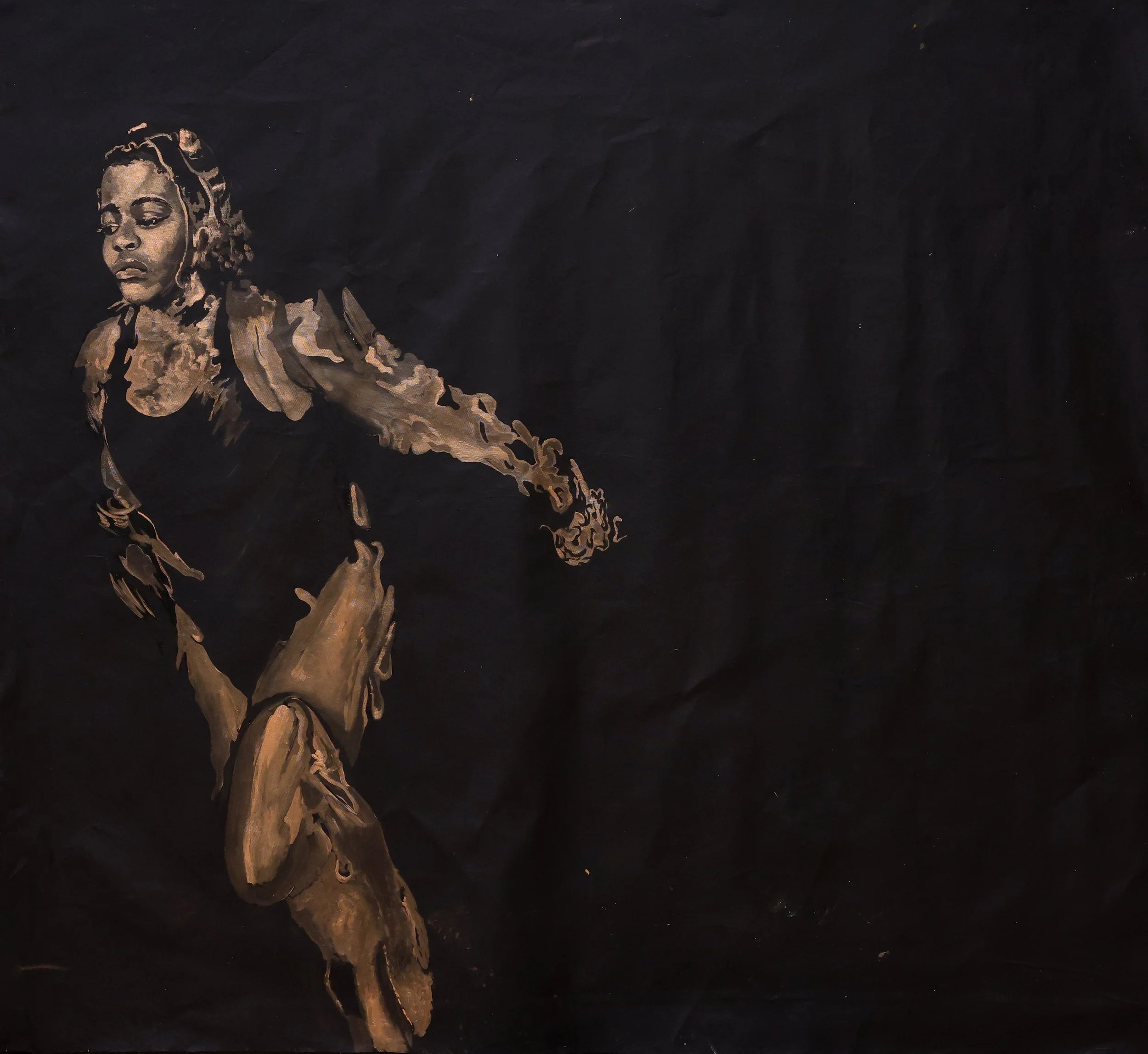
Portrait of an Artist at Ease (Bronze), 2026, Acrylic on Canvas, 72 x 60 in. | 182.88 x 152.4 cm
Portrait of an Artist at Ease (Bronze) marks a reflection on ten years of artistic growth, portraying Fadugba in quiet contemplation against black water and a restrained bronze and black palette. Eyes closed, gently smiling, the figure embodies confidence and acceptance. This bronze iteration revisits an earlier gold version, recipient of the 2025 Norval Sovereign African Art Prize, reaffirming that achievement is not an endpoint but part of a continuing process of reflection and renewal.

Mint Lace Line Up, 2026, Acrylic, ink, and graphite on burned canvas, 76.4 x 44 in|194.056 x 111.76cm
Mint Lace Line Up stacks swimmers in a column that reads as both choreographic formation and formal composition, each figure upright yet distinct, their forms textured by burning that maps the canvas's own history of transformation. The mint ground functions as depth, a pool seen from the side, while a single bead at one swimmer's cap introduces the smallest glint of green against the cool palette.
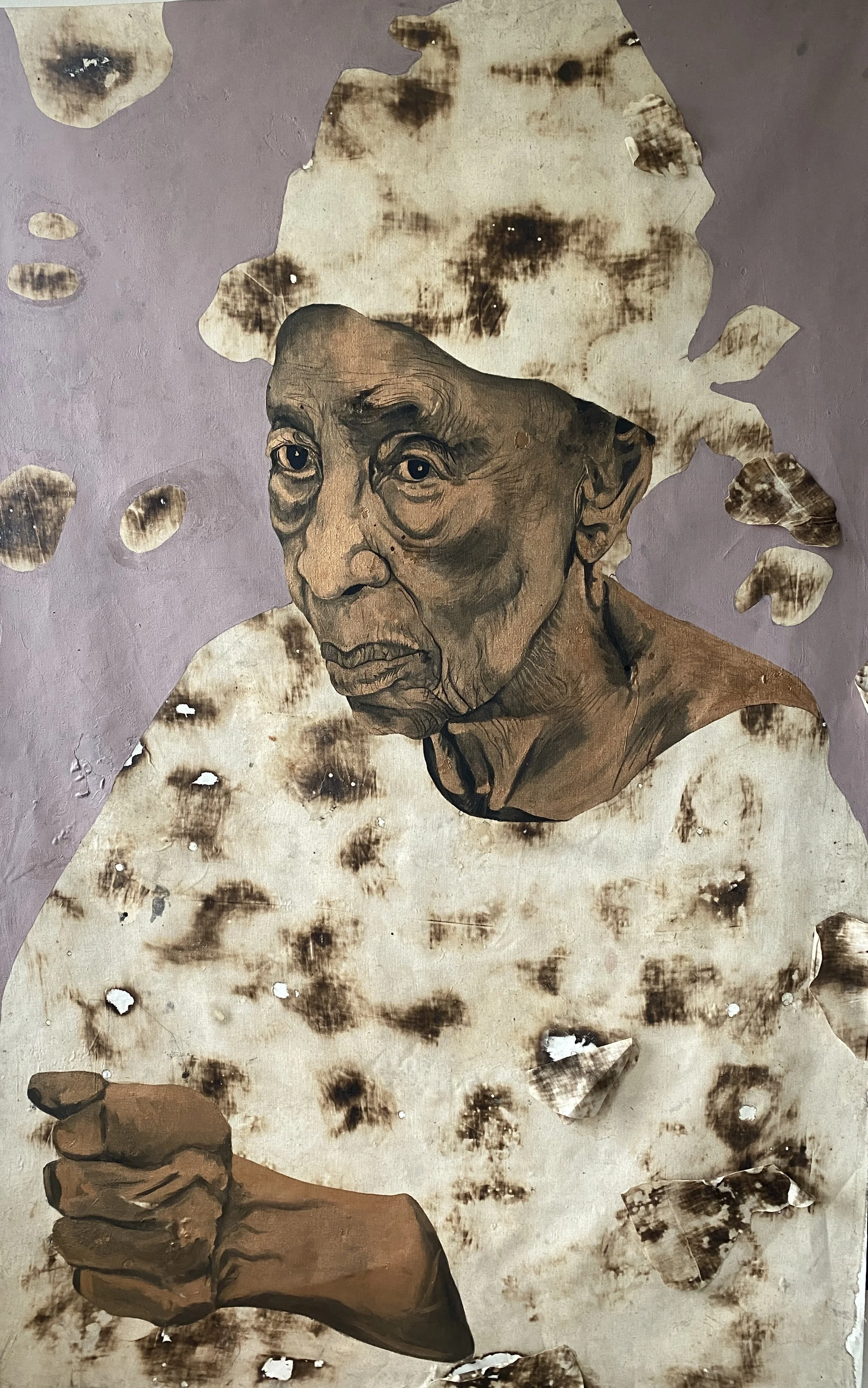
Pool Side Grandma, 23-2026, Acrylic on burned Canvas, 73 x 45 in.|185.42 x 114.3cm
Poolside Grandma by Modupeola explores the relationship between proximity and participation through the figure of her grandmother seated beside a swimming pool. Although she does not know how to swim, her presence at the water’s edge speaks to the many ways individuals can engage with an experience without directly entering it. Presented within The Chemistry of Water, the work reflects on water as a space of connection that extends beyond physical immersion. The grandmother becomes a symbol of observation, care, and intergenerational influence, reminding us that belonging is not always defined by action but also by presence. Through this intimate portrayal, Fadugba honours a familial figure whose connection to the water exists not through swimming, but through witnessing, supporting, and sharing in the experiences of others.
Installation Shots
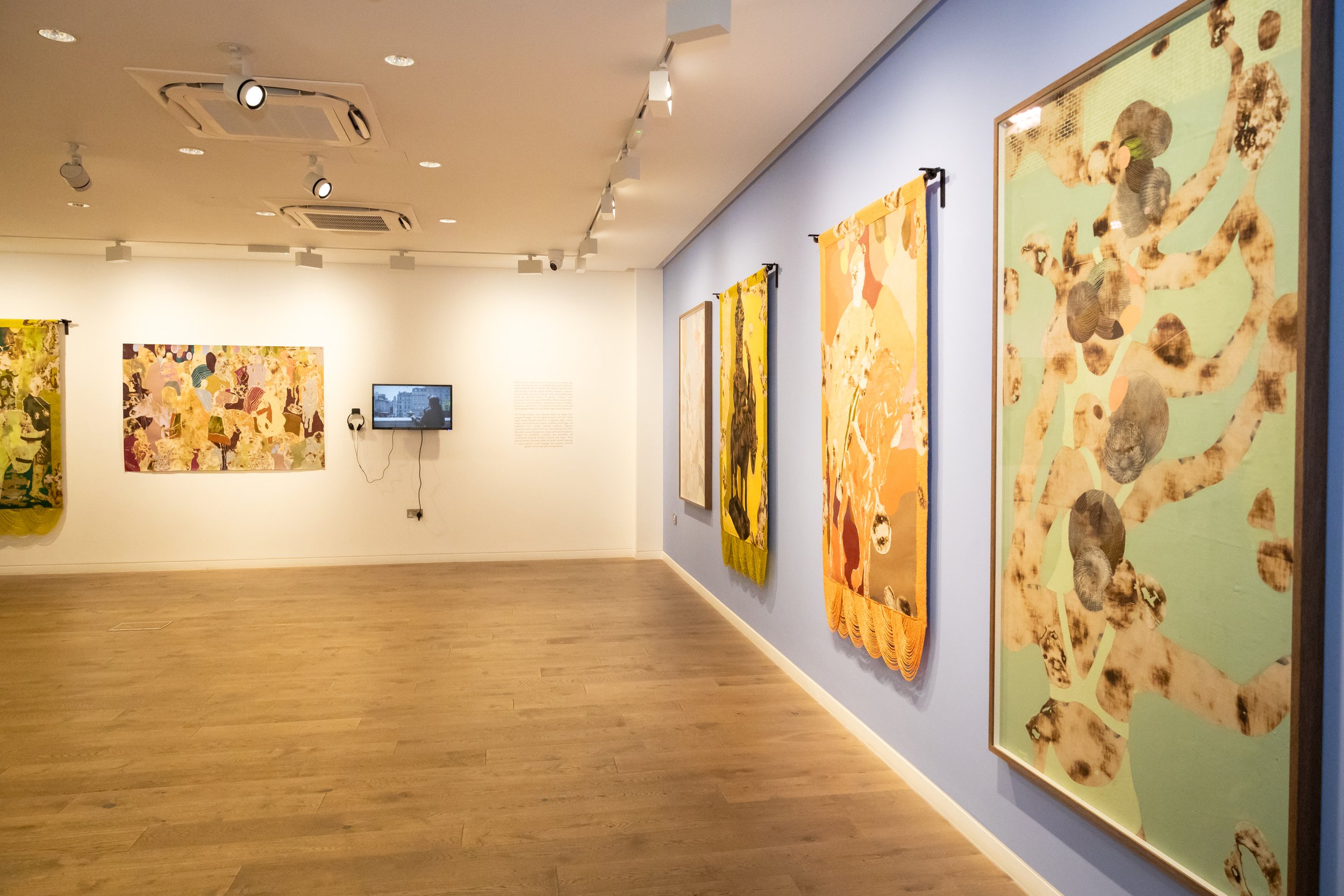
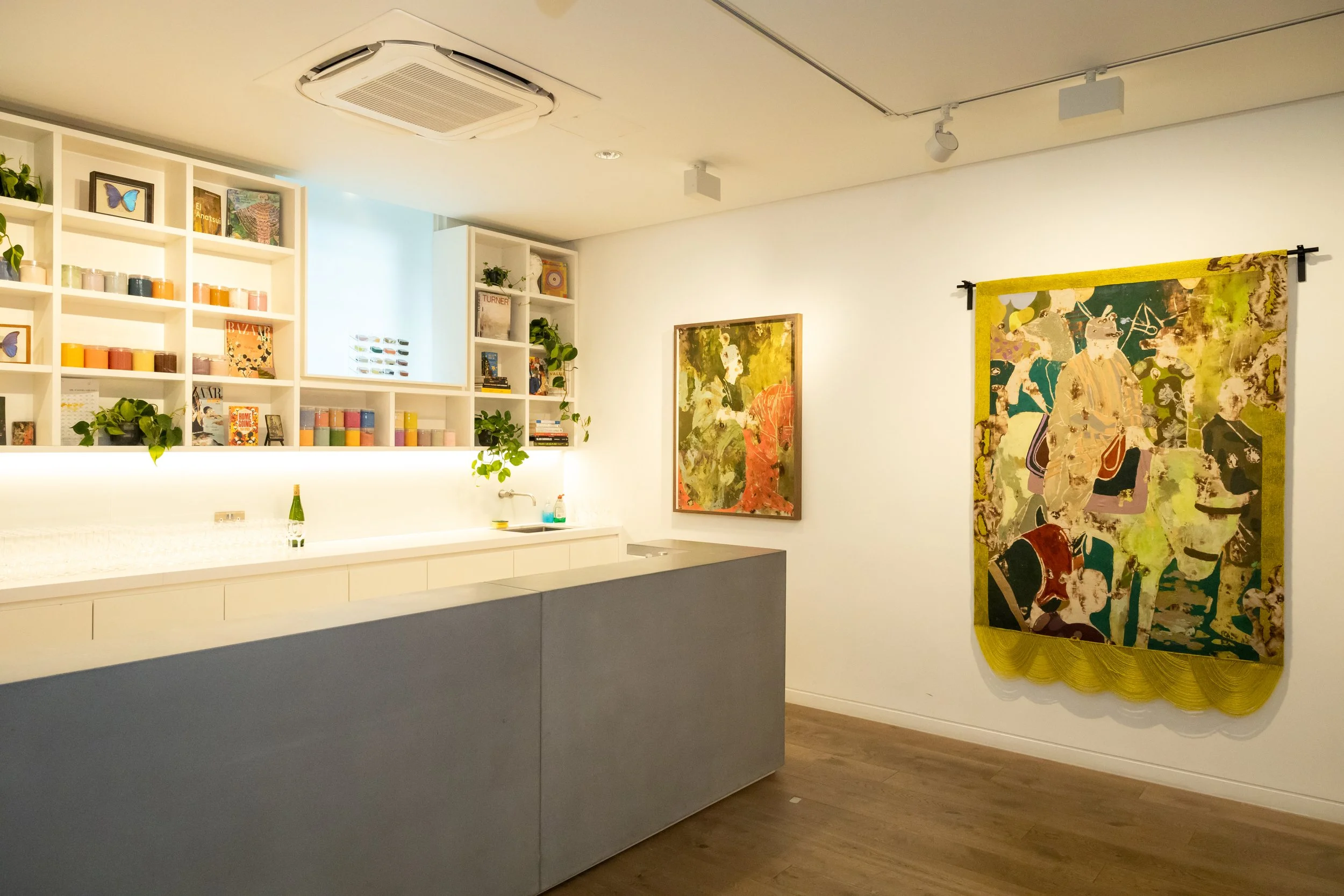
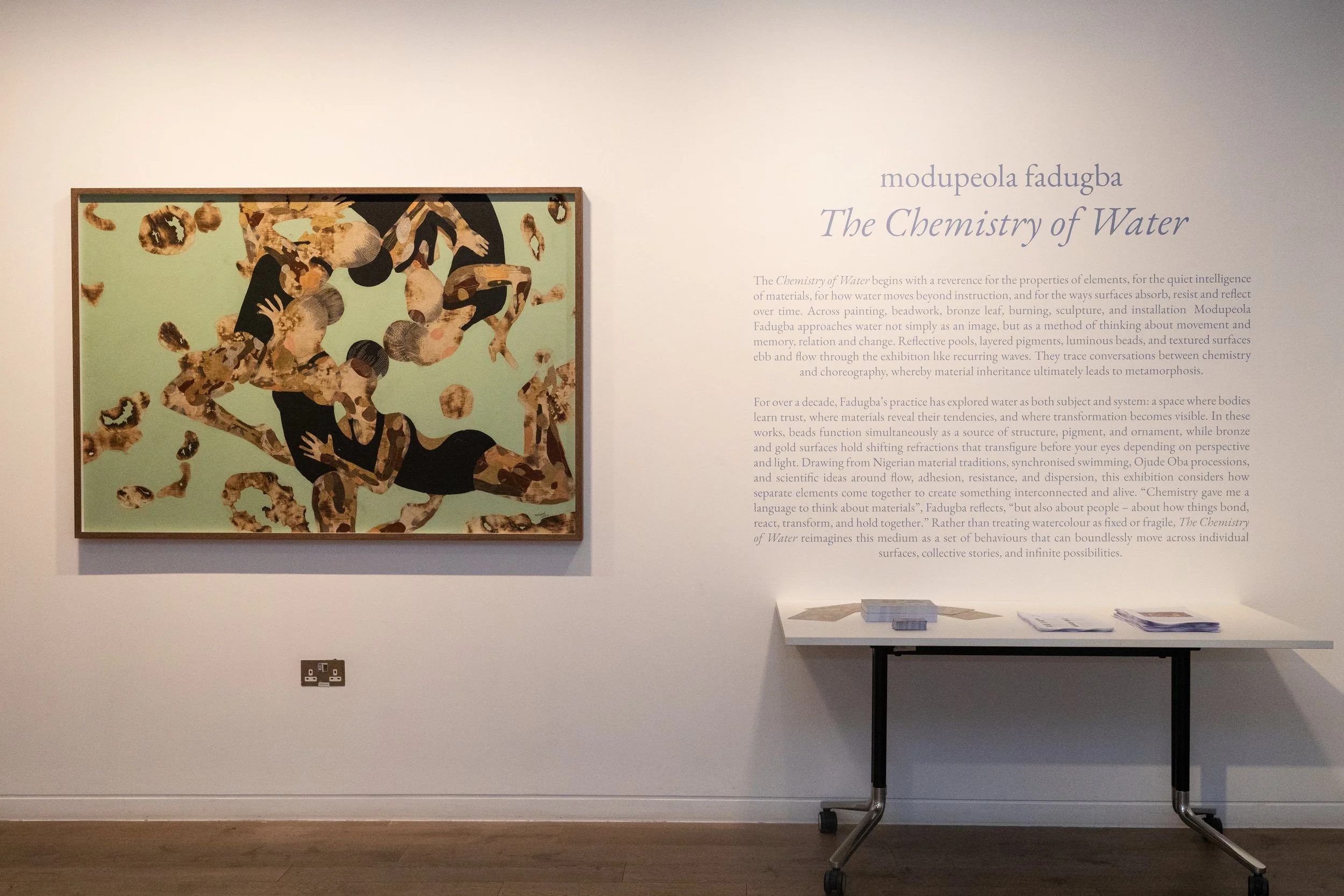
Photos: Mamu Unu